Formal Dress Code Defined: A Complete Guide for Men and Women
April 20, 2026
Formal dress code is one of those phrases that sounds clear until the invitation arrives. It suggests polish, but how…
read more3rd March 2026
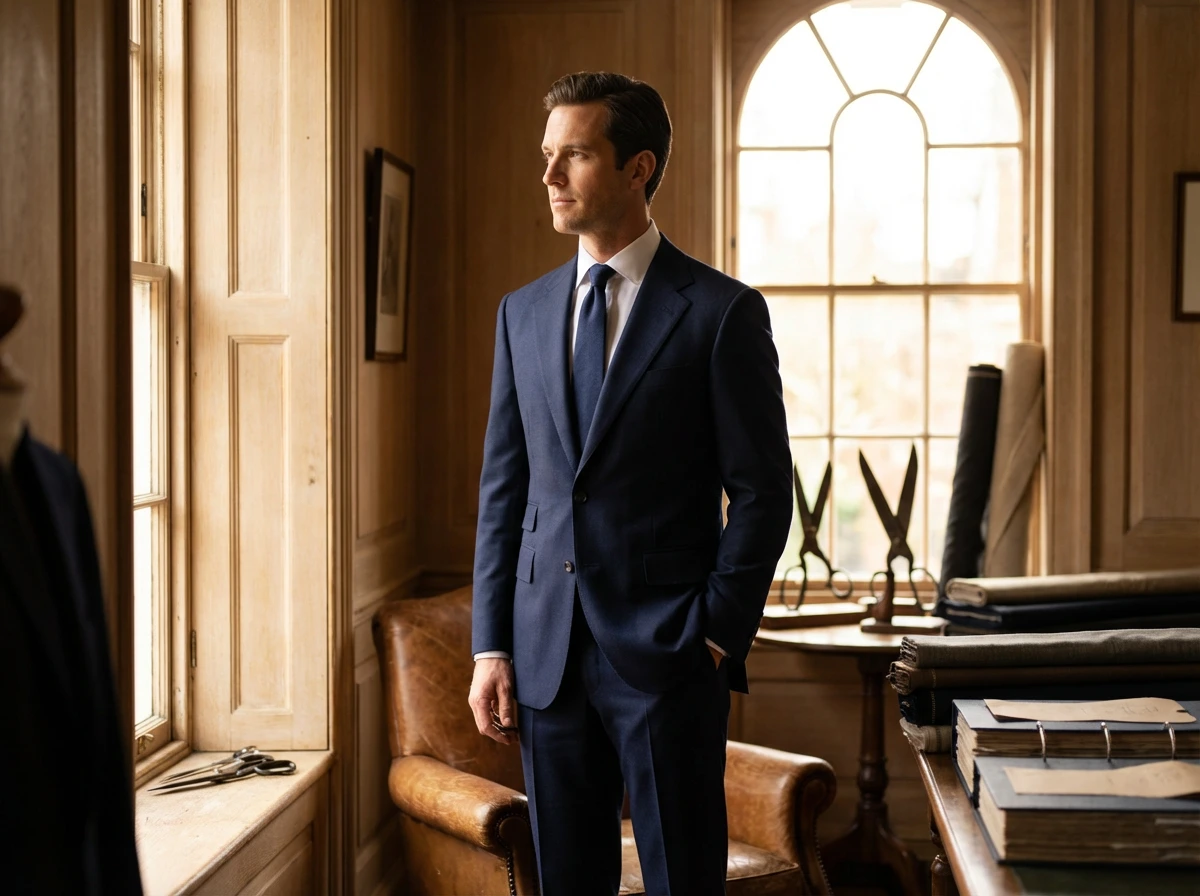
Britain has one of the great tailoring traditions in the world, and yet the sheer range of options available, suit styles, fits, construction methods, lapel types, collar details, can make it genuinely difficult to know where to begin. Whether you are buying your first proper suit or taking stock of a wardrobe that has accumulated over time, having a clear framework makes the decisions considerably more purposeful.
Understanding these distinctions is about more than aesthetics. The right combination of cut, lapel, and construction tells a story about the wearer and their understanding of occasion, their attention to detail, and the kind of professional or social impression they want to make. In a country where suiting carries real cultural weight, from the City of London to the formal events calendar in Scotland, that story matters.
This guide is a practical reference for anyone who wants to dress well and dress intentionally which is why we cover every key variable from suit type to collar construction, with the UK firmly in mind.
The word ‘suit’ is doing a lot of work. It covers everything from a City two-piece to a Highland formal occasion, and the distinctions between suit types are not merely stylistic as they carry real differences in formality, occasion suitability, and what they communicate about the person wearing them. In the UK, where professional dress codes span City finance, law, creative industries, and Scotland’s own rich ceremonial traditions, understanding those differences has practical value.
Suit Type |
Best For |
Formality |
| Two-Piece | Business & Daily Wear | Medium |
| Three-Piece | Formal Work. & Events | High |
| Double-breasted | Statement & Formal Looks | High |
| Dinner Suit | Black Tie Events | Very High |
| Morning Suit | Formal Daytime Events | Very High |
The two-piece, jacket and matching trousers, is the foundation of professional dressing in Britain and the suit most people own first. Its versatility is genuine rather than a sales point: the same well-cut two-piece can carry a person from a client meeting to a formal dinner, depending on how it is worn and what it is made from.
In the UK, fabric weight is as important as cut. A mid-weight wool works across most professional settings year-round and holds its shape through the variable British seasons. Lighter options such as fresco or hopsack come into their own through spring and summer, while heavier cloths suit the colder months. A quality two-piece in the right cloth is one of the most considered purchases a professional can make.
The addition of a matching waistcoat transforms the register of the suit entirely. The three-piece is a distinctly more authoritative look as it reads as deliberate and assured in a way that the two-piece, however well made, simply does not. In City and legal contexts, where formal credibility still matters at the highest level, the three-piece has never gone out of fashion. It also offers a practical advantage: the jacket can come off without undermining the look, which matters at long events or during summer months.
For high-stakes meetings, formal dinners, and award ceremonies, a three-piece in a quality cloth is one of the strongest professional choices available.
The double-breasted suit, characterised by its overlapping front panels and paired rows of buttons, has enjoyed a genuine resurgence over the past decade and now sits comfortably in the modern luxury wardrobe. It is a more structured and visually assertive look than the single-breasted equivalent, with a heritage rooted in British naval and military dress that gives it a particular resonance in this country.
It works best for formal evening occasions and situations where the intention is to make a considered impression. In London’s corporate and social circles, a well-cut double-breasted suit in a dark cloth is among the most compelling choices available.
The dinner suit is a category apart. Distinguished by its satin or grosgrain lapels, an optional matching side stripe on the trousers, and a formality reserved exclusively for black tie occasions, it is not a substitute for a dark business suit and should never be treated as one. The distinction is visible immediately in any room where the dress code is being properly observed.
Across the UK, from charity galas at London’s great institutions to Scottish black tie dinners with their own particular traditions, a well-chosen dinner suit is a wardrobe essential for anyone who takes their formal social life seriously. Our suggestion? Get your tuxedo tailored so it fits you perfectly.
The morning suit, tailcoat, waistcoat, and striped trousers, occupies the top of the formal daytime dress code. It is the correct attire for Royal Ascot, formal weddings, and certain ceremonial occasions, and it is worth knowing what it involves even if the occasions that call for it are relatively rare. Outside of those specific contexts, it does not cross over into professional or evening wear.
Beyond suit type, there are distinct stylistic traditions in suiting that have developed over generations, each reflecting a different approach to construction, silhouette, and occasion. Understanding these helps both with buying decisions and with reading what a suit is actually communicating. For women, the range of options has expanded considerably because suiting now offers a full spectrum of silhouettes that carry genuine professional and formal authority.
This is home territory. British tailoring which is characterised by a suppressed waist, structured shoulders, a defined chest, and a longer jacket length represents the benchmark against which most other suiting traditions are measured. The Savile Row tradition codified these principles, but they run through British tailoring at every level, from the great houses of Mayfair to independent tailors working in cities across the country.
The British style conveys precision and authority, and it suits the formal end of both London’s corporate world and Scotland’s ceremonial occasions with equal conviction. It is also, arguably, the most flattering cut available as the suppressed waist and structured shoulder create a silhouette that works across a wide range of body types.
Where British tailoring is structured and precise, Italian suiting is softer, lighter, and more fluid. The construction is typically less padded, often unlined or half-lined, and the silhouette moves more naturally with the body. The result is a suit that feels less formal in its register but no less considered and it is the difference between authority and elegance.
Italian suiting is widely appreciated in London’s fashion-forward professional circles and works particularly well through the warmer months, when a lighter construction is both more comfortable and more appropriate. For those who find British tailoring too rigid in its structure, Italian suiting offers a compelling middle ground.
The American suit takes a noticeably different approach: a natural, unpadded shoulder, a roomier cut through the chest and waist, and a more relaxed overall silhouette. It is the least structured of the three main traditions and sits in a more informal professional register than either the British or Italian styles.
In the UK context, American-style suiting works well for relaxed professional environments and smart casual occasions. It is less suited to the formal end of the British professional calendar, but for those who find more structured cuts uncomfortable or overly formal for their day-to-day context, it offers a practical and well-considered alternative.
For women, the tailored blazer and trouser suit is the most versatile and widely applicable professional option. The fit principles are straightforward but non-negotiable: the jacket must follow the shoulder line precisely, sit cleanly through the body without pulling, and the trousers should fall with an appropriate break at the shoe. When these conditions are met, and they require either fortunate proportions or proper tailoring, the blazer and trouser suit is one of the most authoritative looks available in professional dressing.
The skirt suit remains a strong option in formal and client-facing professional contexts and carries a traditional authority that the trouser suit has not entirely displaced. Hem length and fabric choice are the two variables that most significantly affect how the look reads: a knee-length skirt in a structured cloth sits in a formal register, while shorter cuts or lighter fabrics shift it toward something more casual. In City, legal, and formal client-facing environments, the skirt suit remains a very considered choice.
The trouser suit has become a genuinely well-accepted option at formal evening events across the UK, including black tie occasions, when it is made from the right fabric and worn with properly considered accessories. This shift has been particularly visible in London, where fashion-forward suiting for women at formal occasions is increasingly the norm rather than the exception. The fabric must carry the weight of the occasion. For example, a wide-leg trouser suit in a heavy silk or fine crepe reads as formal in a way that a lighter or casual cloth simply will not.
Of all the variables covered in this guide, fit has the greatest impact on how a suit looks and what it communicates. The same garment in two different fits can signal entirely different things about its wearer and no quality of fabric or refinement of construction will compensate for a suit that does not sit correctly on the body. This is the principle that underpins the entire tradition of British tailoring.
The slim fit sits closer to the body throughout with a narrower chest, a more pronounced waist suppression, and a tapered trouser leg. It is a contemporary silhouette that works best on lean frames and suits a professional environment where a modern, current look is the right register. In London’s financial and creative sectors, slim fit has been the dominant professional cut for well over a decade and remains widely worn.
The regular or classic fit offers comfortable room through the chest, waist, and leg while maintaining a clean, balanced silhouette. It is the most versatile fit across body types and occasions, and it is the starting point for most bespoke tailoring precisely because it provides the right foundation for proper adjustment. When cut well and fitted correctly, a classic fit suit is one of the most enduring and reliable professional looks available.
The relaxed fit carries more volume through both the jacket and the trousers and has grown significantly in presence within contemporary luxury fashion. When it works, when the fabric is clearly exceptional and the construction is deliberate, it reads as confident and considered. When the quality is not there to carry the extra volume, it simply reads as a poor fit. In the UK market, the relaxed fit works best as a clear and intentional luxury choice rather than a default.
Britain has one of the great tailoring traditions in the world, and the distinction between bespoke and made-to-measure is worth understanding clearly:
Both are superior to buying off the rack without alteration. The UK’s tailoring tradition, from the houses of Mayfair to the independent tailors working in London, Glasgow, and beyond, means that access to properly fitted suiting is well-established at every level of investment.
The jacket defines the suit. Variations in its construction, button stance, and overall silhouette have a significant effect on the formality of the look and the contexts in which it works. Getting the jacket right is the foundation on which everything else is built.
The single-breasted jacket, a single row of buttons, typically one to three, is the most common construction and the most versatile. It works across the full range of professional occasions and, in the right fabric, crosses into black tie territory as a dinner jacket. The two-button version is the most universally appropriate for professional wear, though the one-button has its advocates for a cleaner, more contemporary line.
The double-breasted jacket’s overlapping front panels and two parallel rows of buttons create a more structured and formally assertive look. It has deep roots in British tailoring, the shape echoes the naval and military dress from which it descended, and its current resurgence in luxury menswear feels entirely natural in this context. Worn with peak lapels and a quality cloth, a double-breasted jacket is one of the strongest formal options available.
The blazer is technically distinct from a suit jacket in that it is not part of a matched set because it is a standalone jacket worn with trousers in a different cloth or colour. The navy blazer with grey flannel trousers is perhaps the most British of all smart casual combinations, rooted in a tradition that runs from Oxbridge common rooms to London members’ clubs. A quality blazer is among the most useful garments in a professional wardrobe, offering a level of formality that sits comfortably between the suit and casual dress.
The dinner jacket is the formal evening jacket distinguished by its satin or grosgrain lapels, worn exclusively with matching dress trousers and reserved for black tie occasions. It does not cross over into daytime or casual professional wear, and it should not be treated as though it does. The lapel style, typically peak or shawl, is the most immediately visible signal of the dinner jacket’s evening formality, and it is one of the details that makes black tie dressing so legible to those who understand it.
The lapel is the most visible structural detail on any jacket, and it shapes the overall formality and personality of the look more than almost any other single element. Understanding lapel types is one of the quickest ways to develop a more informed eye for suiting.
The notch lapel features a V-shaped cut where the lapel meets the collar. This is the most common lapel type on professional suits worldwide and the default choice on most ready-to-wear and made-to-measure suiting. It is versatile, appropriate, and unobtrusive across a wide range of professional occasions. For anyone building a suit wardrobe from scratch, notch lapels on a single-breasted jacket are the most reliable starting point.
The peak lapel points upward and outward toward the shoulder, creating a more assertive and visually striking silhouette. It is the more formal of the two standard lapel types and is the natural choice for double-breasted jackets and dinner jackets. In British tailoring, the peak lapel has a particular association with Savile Row’s more structured and commanding cuts. It conveys authority and confidence, and it rewards a jacket that is cut and fitted to carry it.
The shawl lapel is a single, unbroken curved line from collar to button so no notch, no peak, no interruption. It is found almost exclusively on dinner jackets and smoking jackets and belongs firmly in the category of evening wear. Elegant and quiet in its effect, the shawl lapel is one of the most distinctive signals in formal dressing that a jacket is intended purely for evening occasions.
The collar is the quieter detail and it is less immediately striking than the lapel, but one that those with a trained eye will notice. It determines how the jacket sits on the shoulder, how it frames the shirt and tie, and how refined the finished look feels at close quarters.
The standard collar sits flat against the shirt collar with minimal shaping and is found on the vast majority of ready-to-wear suits. It is functional, consistent, and appropriate across most professional contexts. Not a detail that draws attention, but not one that should.
The Melton collar is a slightly rolled, softer collar construction that is closely associated with the British bespoke tailoring tradition. It gives the jacket a more relaxed and refined drape at the neck, less pressed, more lived-in in the best sense, while maintaining full formal credibility. It is one of the details that separates a jacket with genuine craft behind it from one that simply looks well made, and it is the kind of thing that a fellow wearer of good suits will notice.
The Mandarin or band collar removes the traditional collar fold entirely, sitting close to the neck with a minimal or absent lapel. It appears on contemporary and fashion-forward suiting and works well in creative professional and smart casual contexts where a clean, modern aesthetic is the right register. It is not appropriate for traditional corporate environments or formal occasions, but for the right setting and the right person, it offers a distinctive and considered alternative to the standard construction.
Off-the-rack suits can work for convenience, but tailoring ensures a precise fit that significantly improves how a suit looks and feels.
If you are attending an important event, working in a client-facing role, or investing in long-term wardrobe pieces, made-to-measure or bespoke tailoring offers a noticeably higher standard.
Every variable covered in this guide, suit type, stylistic tradition, fit, jacket construction, lapel, collar, interacts with every other. A peak lapel double-breasted suit in a dark flannel communicates something entirely different from a relaxed single-breasted jacket in a summer hopsack, and both are correct in their own context. The skill is not in knowing every detail but in understanding how the details combine and what they say together.
A useful framework for UK dressing:
In the UK, knowing your context is as important as knowing your cut. The City of London’s conservative standards and Glasgow’s smart but more relaxed business culture call for different calibrations of the same principles. A consultation with Suited & Booted ensures every element, from style and fit to lapel and collar, is chosen with precision and purpose, and that the result is right for the specific occasion and environment. Book your appointment to get started.
A suit is a matched set, jacket and trousers (and sometimes a waistcoat), cut from the same cloth and intended to be worn together. A blazer is a standalone jacket worn with non-matching trousers, typically in a complementary colour or texture. The blazer is generally less formal than a suit and sits more naturally in smart casual and business casual contexts, though a quality blazer worn with well-chosen trousers can carry real professional weight.
Peak lapels are the most formally assertive of the standard types, followed by notch lapels. Shawl lapels are inherently formal but belong exclusively to evening wear as they are not appropriate for daytime or standard professional dressing. For a business suit, notch lapels are the conventional choice; for a double-breasted jacket or a dinner jacket, peak lapels are the natural one.
The UK’s seasons call for a more considered approach to cloth than many other markets:
Bespoke means the suit is built entirely from a pattern created for the individual from scratch where every measurement, every structural decision, every finishing detail is made specifically for that person. It is the highest standard of tailoring available and the tradition that Savile Row made world-famous. Made-to-measure uses an existing base pattern adjusted to the individual’s measurements, with a degree of choice in cloth and details. Both produce a result that is significantly superior to an unaltered off-the-rack suit. For anyone serious about their professional wardrobe, either represents a meaningful and lasting investment.
April 20, 2026
Formal dress code is one of those phrases that sounds clear until the invitation arrives. It suggests polish, but how…
read moreMay 25, 2026
Semi-formal is one of the dress codes that sounds self-explanatory until the invitation arrives and the questions begin. Not quite formal, not…
read more