The best suits for men are not defined by price, label or trend alone. Two suits at the same price point can perform very differently depending on fit, cloth and construction, which is why those three factors deserve more attention than the name on the label.
A truly refined suit should fit well, move comfortably and serve the wearer across professional and personal occasions. Fabric, construction and proportion should work together to create a garment that feels as considered as it looks. This applies equally to formal business suits and to smart casual tailoring worn beyond the office.
What Makes the Best Suits for Men?
Fit and Proportion
The shoulder line, chest, waist and jacket length should create a balanced silhouette. Sleeve length, trouser rise and break should feel natural rather than forced. The suit should allow movement without appearing loose or losing its structure.
Fabric Quality
Worsted wool, lightweight wool, flannel, fresco, high-twist wool and linen blends each serve different seasons and settings. The best fabric is not necessarily the softest. It is the cloth that suits the wearer’s routine, climate and frequency of use.
Construction and Craftsmanship
Canvas, lining, seams and lapel structure affect how the suit sits and lasts, holding its shape through repeated wear rather than sagging after a few outings. Craftsmanship should produce balance and longevity rather than decoration for its own sake, so the details that matter most are often the ones that are hardest to see.
The Best Tailored Suits: Why Tailoring Matters
Tailored suits are shaped around the wearer rather than chosen entirely from standard sizing, so the shoulders, chest and trouser rise are built around the individual rather than adjusted after the fact. This makes a noticeable difference to how the finished suit moves and sits. Explore Suited & Booted’s full tailoring services to see the range on offer.
Bespoke Suits
Bespoke tailoring considers measurements, posture, cloth and individual styling choices from the very first consultation. Every element, from the pattern to the finishing details, is built around one wearer rather than adapted from an existing block.
Explore men’s bespoke tailoring.
Made-to-Measure Suits
Made-to-measure adapts a base pattern to the client’s measurements and provides more choice of cloth, lapel and finish than ready-to-wear. It offers a meaningful step up in fit without the timeline or cost of a fully bespoke commission.
Read about bespoke and made-to-measure tailoring.
Ready-to-Wear Suits
Ready-to-wear suits provide convenience and immediacy, which suits an occasional wearer or a tight deadline. Fit and personalisation are more limited, so a good tailor’s alterations service is often needed to get the best from the garment.
Best Suits for Men by Occasion
Best Business Suits for Men
Navy, charcoal and mid-grey provide versatile foundations for a professional wardrobe, since each pairs easily with different shirts and ties without appearing repetitive. Worsted wool and mid-weight cloths work well for regular wear across meetings, presentations and travel, holding their shape through long days.
Best Wedding Suits for Men
Wedding suits should reflect the season, venue and dress code rather than following a single template for every ceremony. A summer garden wedding calls for a different cloth and colour to a formal winter ceremony in a city venue.
Explore wedding tailoring.
Best Formal and Evening Suits for Men
Tuxedos, dinner jackets and dark tailored suits require sharp structure and restrained styling, with the emphasis on a clean silhouette rather than decorative detail. Satin lapels, precise trouser break and polished footwear all contribute to a finished evening look.
A well-cut dinner suit in a single dark colour, worn with minimal accessories, will almost always look more considered than one with excessive detail.
Best Versatile Suits for Men
A refined two-piece suit or tailored separates can move between business, travel and social occasions without needing a full wardrobe change. Choosing a versatile mid-tone cloth makes it easier to dress the same suit up or down as the day requires.
Best Suit Fabrics for the UK Climate
Year-Round Suit Fabrics
Worsted wool and mid-weight wool balance structure, drape and durability, making them a dependable choice for most of the year. They also tend to travel well, recovering their shape after a day in a suit carrier.
Summer Suit Fabrics
Lightweight wool, tropical wool, fresco and linen blends offer greater breathability during warmer months, without sacrificing the structure expected of a business suit. Fresco and high-twist weaves in particular resist creasing on long, warm days.
Explore the guide to summer suit fabrics.
Autumn and Winter Suit Fabrics
Flannel, heavier wool and textured cloths offer greater warmth and seasonal depth, and tend to suit richer colours than their summer counterparts. They also pair naturally with heavier overcoats and knitwear through the colder months.
How to Recognise a Quality Suit
Quality Suit Checklist
Look for:
- Clean shoulders
- A jacket that closes without strain
- A natural lapel roll
- Correct sleeve length
- Trousers that fall cleanly
- Seasonally appropriate cloth
- Considered lining and structure
- Refined buttons and stitching
- Comfortable movement
- Balanced proportions
Common Mistakes Men Make When Choosing a Suit
Avoid selecting a suit only by colour or brand, since neither guarantees a good fit. An overly tight fit, inappropriate fabric weight and excessive personalised details can all reduce the garment’s comfort and versatility, and a fit that looks sharp standing still can quickly become restrictive once worn through a full day.
Building a Long-Term Suit Wardrobe
Essential Suits for a Professional Wardrobe
A considered wardrobe may begin with:
- A navy business suit
- A charcoal or mid-grey suit
- A lighter seasonal option
- A formal evening suit or tuxedo
- Tailored separates
Explore tuxedo tailoring.
Colour, Styling and Personal Details
Personal details should feel subtle and intentional rather than a display of decoration. Lapels, buttons, pockets, linings and monograms can make a suit personal without reducing its longevity, provided they are chosen with the same restraint as the rest of the garment.
Create One of the Best Suits for Men with Suited & Booted
Suited & Booted creates tailored garments for men in Glasgow, London and across the UK. Each suit is developed through personal consultation, expert cloth guidance and considered fitting. The result is a garment shaped around the client’s professional life, personal style and long-term wardrobe.
Book an appointment with Suited & Booted.
Frequently Asked Questions about The Best Suits for Men in the UK
What are the best suits for men?
The best suits combine precise fit, quality cloth, strong construction and occasion-appropriate styling. No single suit works for every occasion, so the best wardrobe usually contains a small rotation built around these qualities.
What makes a suit high quality?
Fit, proportion, fabric and construction determine the overall quality of a suit. Price and branding matter far less than how these elements work together on the individual wearer.
Are tailored suits better than ready-to-wear suits?
Tailored suits generally offer more control over fit and fabric than standard sizing. The difference is most noticeable in the shoulders and sleeve length, which are rarely correct on an off-the-peg garment.
What are the best tailored suits for men?
The best tailored suits are designed around the wearer’s measurements, posture and intended use. This can range from a made-to-measure adjustment of an existing pattern through to a fully bespoke commission.
What colour suit should every man own?
Navy is one of the most versatile choices, while charcoal and mid-grey are also strong foundations. These neutrals pair easily with most shirts and ties, making them a dependable starting point for a working wardrobe.
What fabric is best for men’s suits in the UK?
Wool is highly versatile. Different weights and finishes can be selected for each season. Worsted wool suits year-round wear, while flannel and heavier cloths come into their own during the colder months.
Is a bespoke suit worth it?
It can be a valuable choice for frequent suit wearers and clients seeking precise fit and long-term wardrobe value. The investment tends to pay off over years of wear rather than in the price of a single garment.
How many suits should a professional man own?
A small rotation of well-fitted business, seasonal and occasion suits provides a practical starting point. Three to five well-chosen suits will usually cover most professional and social occasions without unnecessary duplication.
What is the best suit for a wedding?
The right suit depends on the dress code, venue, season and role of the wearer. A groom’s suit, for example, may call for a different cut and colour to that of a guest attending the same event.
How should a good suit fit?
It should sit cleanly through the shoulders, close without strain and allow comfortable movement while maintaining balanced proportions. If the jacket pulls across the back when buttoned or the sleeves ride up when the arms move, the fit needs adjusting.
Buying a suit may appear straightforward until the options begin to multiply. Ready-to-wear shops, online retailers, department stores, made-to-measure services and bespoke tailors each offer a different experience. The right route depends on the fit, fabric quality, level of guidance and degree of personalisation required.
For men and women investing in businesswear, wedding tailoring or long-term wardrobe pieces, the best place to buy a suit is one that understands the individual behind the garment. That means taking the time to discuss fit, fabric and occasion before a single measurement is taken, rather than steering every client towards the same rail of stock sizes. The same principle applies whether the need is a single wedding suit, a business wardrobe or everyday casual tailoring.
What Makes the Best Place to Buy a Suit?
The best suit-buying experience combines fit, cloth, construction and personal service. A suit should be chosen around the wearer’s proportions, lifestyle and intended use. It may need to perform through meetings, travel, formal events, weddings and refined social occasions. Suited & Booted’s full range of tailoring services covers everything from business suits to casual and occasion wear.
Fit, Proportion and Comfort
Fit separates an acceptable suit from a truly refined one. The shoulders, jacket balance, sleeve length, trouser rise and overall silhouette should work together. The garment should feel structured without appearing stiff and comfortable without losing polish.
Fabric, Construction and Finish
Fabric affects drape, texture, breathability and longevity. Worsted wool, lightweight wool, flannel, linen blends and silk blends each serve different seasons and occasions. Cloth from houses such as Loro Piana, Zegna, Holland & Sherry and Dormeuil offers a wide range of considered options. The best fabric is the one suited to the wearer’s routine, climate and frequency of use.
Service and Personal Consultation
A refined appointment should include clear guidance on cloth, cut and styling, along with honest advice on what will genuinely suit the wearer rather than a hard sell. The experience should feel relaxed and expert, particularly for clients purchasing a suit for professional visibility, a wedding or an important event. Good service also means being upfront about timelines, so fittings can be planned around the date they are needed for.
Where to Buy Men’s Suits in the UK
Men should begin by defining the purpose of the garment, since a suit built for daily office wear needs a different approach to one bought for a single wedding. Ready-to-wear can offer immediacy, which suits a tight deadline or an occasional wearer. A tailored appointment provides a more personal route for clients who care about fit, proportion and long-term use.
Explore men’s bespoke tailoring.
Business Suits for Men
Business suits should communicate authority, confidence and restraint. Navy, charcoal and mid-grey provide versatile professional foundations. Worsted wool and seasonally appropriate fabrics support regular wear through meetings, travel and client events.
Wedding and Occasion Suits for Men
Wedding tailoring should reflect the season, venue and role of the wearer. Two-piece suits, three-piece suits, tuxedos and tailored separates can all be appropriate. Lighter colours suit daytime and summer weddings, while deeper shades work well for formal evening settings.
Explore wedding suits for men.
Where to Buy Women’s Suits in the UK
Women’s tailoring now works across professional, formal and social wardrobes. Rather than relying on standard sizing, clients should consider proportion, silhouette and fabric quality. A tailored approach allows each element to be shaped around the individual.
Explore women’s tailoring.
Professional Women’s Suits
Tailored trouser suits, skirt suits, structured jackets and coordinated separates can all create a polished professional wardrobe. The garment should reflect the client’s setting, whether corporate, creative, client-facing or formal, and the cut can be softened or sharpened accordingly. A well-chosen fabric and finish will carry the same suit confidently from an early meeting into an evening event.
Women’s Suits for Events and Formal Occasions
Tuxedo-inspired tailoring, wide-leg trouser suits and elegant separates offer a sophisticated alternative to dresses for weddings, receptions and formal dinners. Fabric, footwear and jewellery should work together to create an event-ready finish, with fabric weight and sheen doing much of the work in signalling formality. The strongest results come from choosing one statement element, whether that is the cut, the colour or the fabric, rather than layering several at once.
Ready-to-Wear, Made-to-Measure and Bespoke: Which Route Is Right?
The right option depends on timeline, fit expectations, budget and level of personalisation, and each route can suit a different stage of a client’s wardrobe. Understanding what each service actually involves makes it easier to choose with confidence.
Read the guide to bespoke versus made-to-measure.
Ready-to-Wear Suits
Ready-to-wear garments are produced in standard sizes and can be bought off the peg with little to no wait. They are convenient, but may not fully reflect individual posture and proportion, so alterations are often needed to achieve a genuinely clean line.
Made-to-Measure Suits
Made-to-measure adjusts a base pattern to the client’s measurements, offering improved fit and a greater choice of cloth and styling than standard sizing allows. It sits between ready-to-wear and bespoke, and suits clients who want a more personal result without a fully bespoke timeline.
Bespoke Suits
Bespoke tailoring creates the garment around the client from a unique pattern, rather than adapting an existing one. It provides the highest level of personalisation and is particularly valuable for frequent suit wearers, professionals and wedding clients who want a fit that cannot be replicated off the shelf.
How to Choose the Right Suit for the Occasion
Business and Professional Settings
Choose clean silhouettes, refined cloth and understated details over anything trend-led or decorative. The garment should support credibility without appearing over-styled, letting the fit and fabric do the talking in a boardroom or client meeting.
Weddings and Formal Events
Consider the venue, time of day and dress code before choosing a cut or colour. Black tie calls for a tuxedo, while lighter tailoring in softer tones may suit a summer or countryside wedding better than a heavier formal cloth.
Explore tuxedo tailoring.
Smart Casual and Lifestyle Dressing
Tailored jackets, refined trousers and soft separates can move beyond the office into dinners, travel and social occasions without ever feeling like off-duty workwear. A slightly softer shoulder and unstructured lining usually strike the right balance for this kind of dressing.
Suit Fabrics for the UK Climate
UK tailoring must account for changing seasons, heated interiors and unpredictable weather, often within the same working week. A suit that performs well indoors and out, across a damp commute and an overheated office, will earn its place in a wardrobe far more quickly than one chosen for looks alone.
Year-Round Suit Fabrics
Worsted wool and mid-weight wool provide structure, durability and versatility across much of the year, making them the natural starting point for a first or primary suit. They hold a crease well and resist creasing during long days of travel or meetings.
Summer and Warmer-Weather Suit Fabrics
Lightweight wool, tropical wool, high-twist wool and linen blends offer greater breathability without losing refinement, which matters as much on a warm commute as it does abroad. High-twist weaves in particular resist creasing, making them a practical choice for travel.
Read the guide to warm-weather suit fabrics.
Autumn, Winter and Evening Fabrics
Flannel, heavier wool and textured cloths introduce depth and warmth for the colder months, and tend to hold their shape well over a long day. Evening tailoring may also benefit from darker colours and sharper structure, which read as more formal under low light.
What to Look for Before Booking a Suit Appointment
Suit Appointment Checklist
Consider:
- The occasion
- Frequency of wear
- Season
- Preferred silhouette
- Existing wardrobe colours
- Required level of personalisation
Common Mistakes to Avoid When Buying a Suit
Avoid choosing by appearance alone, since a suit that looks striking on a hanger can still sit badly on the body. Poor fit can undermine even the finest cloth, while a fit correctly chosen can flatter a much simpler fabric. Other common mistakes include overlooking fabric weight for the season, choosing trend-led details that date quickly, and leaving too little time before a wedding or important event for alterations to be finished properly.
Buy a Suit with Suited & Booted Glasgow
Suited & Booted offers personal tailoring for men and women in Glasgow and across the UK. Clients are guided through cloth, fit and styling to create garments for professional life, weddings, evening occasions and long-term wardrobe building, with every appointment shaped around how the finished suit will actually be worn.
Book an appointment with Suited & Booted.
Frequently Asked Questions about Best Place to Buy Suits in the UK
What is the best place to buy a suit in the UK?
The best place is one that provides expert guidance on fit, fabric, construction and occasion. Look for a tailor who takes the time to understand how the suit will actually be worn, rather than one that sells from a rail.
Where should men buy suits in the UK?
Men should choose a specialist that understands proportion, cloth and the purpose of the garment. A good specialist will ask about the occasion and lifestyle before recommending a cut or cloth.
Where should women buy suits in the UK?
Women should consider a tailoring specialist that can shape the garment around their body, style and occasion. This is particularly valuable for events where standard sizing rarely produces a flattering result.
Is bespoke the best way to buy a suit?
Bespoke is the most individual option and is particularly valuable for clients seeking precise fit and long-term use. It typically involves a longer process and higher investment, but delivers a pattern that is entirely the client’s own.
Is made-to-measure better than ready-to-wear?
Made-to-measure generally offers greater fit control and personalisation. It adapts an existing pattern to the client’s measurements, making it a practical middle ground between speed and precision.
Should I buy a suit online or in person?
Buying in person allows the client to assess fabric and refine the fit with expert guidance. This is especially important for occasion suits, where colour and finish can look different in person to how they appear on screen.
What should professionals look for when buying a suit?
Look for precise fit, versatile cloth, balanced construction and a silhouette suited to professional settings. A suit that performs well across meetings, travel and long days offers far better value than one chosen for a single occasion.
What fabric is best for a suit in the UK?
Wool is one of the most versatile options. Lightweight wool suits warmer months, while flannel and heavier wool work well in cooler seasons. A worsted wool in navy or charcoal is usually the safest starting point for a first suit.
Can women wear tailored suits for formal occasions?
Yes. Trouser suits and tuxedo-inspired tailoring can work beautifully when the fabric and styling suit the occasion. Fabrics such as silk, crepe or fine wool tend to elevate the look for evening events.
What makes a suit look premium?
A premium suit combines precise fit, strong cloth, balanced proportion and refined finishing. The overall impression usually comes from restraint, letting quality materials and construction speak for themselves rather than decorative detail.
Tailoring language can be confusing. Terms such as bespoke, made to measure, custom, and ready-to-wear are often used as though they mean the same thing. In reality, they describe very different approaches to fit, craftsmanship, personalisation, time, and long-term value.
For UK professionals, wedding guests, grooms, and men building a considered wardrobe, understanding the difference matters. The right suit should not only look good on the day you buy it. It should feel comfortable, reflect your personal style, and serve you well across business, formal events, weddings, and evening occasions.
A suit is a wardrobe investment. Choosing between ready-to-wear, made to measure, and bespoke depends on what you need from the garment, how often you will wear it, how precise the fit needs to be, and how personal you want the experience to feel.
At Suited & Booted, tailoring begins with the person. We guide clients through fit, fabric, construction, styling, and aftercare, helping them make informed choices that feel personal, refined, and made to last.
Why the Difference Matters
Understanding tailoring terminology matters before investing in a suit because not every garment described as custom, tailored, or personalised is made in the same way.
A ready-to-wear suit is produced in standard sizes. A made-to-measure suit is adjusted from an existing base pattern. A bespoke suit is created around the individual client, with a pattern developed specifically for them.
These distinctions affect almost every part of the garment: fit, construction, fabric choice, comfort, style, and longevity. Price differences usually reflect the time, skill, fittings, materials, handwork, and level of personalisation involved. The more individual the process, the more refined the result can be.
For professionals, the right suit should offer confidence as well as polish. It should feel comfortable in meetings, refined at events, and dependable season after season.
In the UK, seasonality also matters. A summer wedding suit, winter business suit, black-tie garment, or everyday office suit may each require different fabrics, weights, linings, and construction choices.
The Problem with Misused Tailoring Terms
The word custom is often used broadly. Some brands use it to describe small changes to a ready-made garment. Others use it for made-to-measure suits, where an existing pattern is adjusted. In some cases, custom may refer to fully bespoke tailoring.
This can make it difficult for clients to compare options clearly.
The most important questions are how the garment is made, whether an individual pattern is created, how many fittings are included, and how much control you have over the finished piece.
Understanding these details helps you choose the right tailoring route with confidence.
What Is a Ready-to-Wear Suit?
A ready-to-wear suit is a finished garment produced in standard sizes and available to buy immediately. It is designed for convenience, speed, and accessibility.
Ready-to-wear suits are not created around an individual’s measurements. Instead, they are made to fit a broad range of body types using standard sizing.
For some occasions, ready-to-wear can be useful. If you need a suit quickly or only wear tailoring occasionally, it may offer a practical solution. However, the fit and personalisation are naturally more limited.
How Ready-to-Wear Works
- The process usually begins with choosing a suit in your closest standard size.
- The garment has already been produced as a finished product, rather than being created around your individual measurements.
- You try on the suit to assess the fit across the shoulders, chest, waist, sleeves, jacket length, and trousers.
- If the suit is close enough, small alterations may be made to improve the final fit.
- These alterations can include adjusting trouser length, sleeve length, waist, or minor jacket shaping.
- The level of adjustment is limited because the suit is built from a standard pattern and finished construction.
- Areas such as shoulder shape, posture, jacket balance, and body asymmetry are difficult to correct properly.
- The final result can be practical for immediate or occasional use, but it will not offer the same personal fit, fabric choice, or refinement as made-to-measure or bespoke tailoring.
Pros of Ready-to-Wear Suits
- Ready-to-wear suits are immediately available, which makes them useful when time is limited.
- They usually have a lower entry price than made-to-measure or bespoke tailoring.
- You can try the garment on before buying, which gives an instant sense of colour, shape, and overall style.
- They can be suitable for urgent or occasional use, especially when the dress code is not highly formal.
- Alterations can improve the fit slightly, particularly around trouser length, sleeve length, waist suppression, and hems.
- For men who need a quick solution, ready-to-wear can provide a starting point.
Cons of Ready-to-Wear Suits
- Standard sizing rarely fits perfectly. A jacket may fit across the chest but sit poorly on the shoulders. Trousers may work at the waist but need adjustment through the seat or leg.
- Fabric and style choices are limited to what is already available.
- Alterations can only adjust so much. Major structural changes, especially through the shoulders, chest, and jacket balance, are difficult or impossible to correct properly.
- Ready-to-wear suits do not usually account for posture, shoulder slope, stance, or body asymmetry.
- They can feel less personal and less distinctive than a garment made around the individual.
- They may not offer the same longevity as a properly tailored garment, particularly if the fit, cloth, or construction is not suited to regular wear.
What Is Made to Measure?
Made to measure is a tailoring process where a suit is created from an existing base pattern that is adjusted to the client’s measurements.
It offers a stronger fit and more personalisation than ready-to-wear, but it is not the same as full bespoke tailoring. The garment begins with a pre-existing pattern, rather than a pattern drafted entirely from scratch.
Made to measure can be a strong option for men who want a more refined fit, more fabric choice, and a garment that feels more personal than ready-to-wear.
How Made to Measure Works
- The process usually begins with a consultation and measurements.
- A standard pattern is then adjusted to better suit the client’s proportions.
- The client may choose fabric, lining, buttons, lapels, pockets, and other styling details.
- The garment is produced using the adjusted pattern.
- A final fitting allows small refinements to be made before the suit is completed.
Pros of Made to Measure
- Made to measure offers a better fit than ready-to-wear because the garment is adjusted to your measurements.
- It provides more fabric and design options, allowing the suit to feel more personal.
- It is often more accessible than bespoke while still offering a more tailored experience.
- It can be a good option for professionals who need reliable business suits.
- It works particularly well for men with relatively standard proportions who want a cleaner, sharper fit.
- Once the fit is established, repeat orders can be more straightforward.
Cons of Made to Measure
- Made to measure starts from a pre-existing pattern, which means there are natural limits to how much the garment can be adjusted.
- It may not fully account for posture, asymmetry, shoulder slope, or more complex fit requirements.
- There may be fewer fittings than bespoke, which means fewer opportunities to refine the garment before completion.
- The level of handwork and construction varies depending on the tailor, brand, and garment level.
- Personalisation is more limited than bespoke, although it still offers significantly more choice than ready-to-wear
What Is Bespoke Tailoring?
Bespoke tailoring is the most personalised form of tailoring. The garment is created around the client’s body, preferences, posture, lifestyle, and intended use.
Rather than adjusting an existing pattern, bespoke tailoring begins with the individual. Measurements, posture, proportions, and style preferences are used to create a garment that is built specifically for the wearer.
Bespoke is about more than fit. It is about craftsmanship, construction, fabric, detail, and the experience of creating something that feels truly personal.
How Bespoke Tailoring Works
- The process begins with a detailed consultation.
- Measurements are taken, alongside an assessment of posture, shoulder balance, stance, and body shape.
- An individual pattern is created for the client.
- Fabric is selected according to the occasion, season, lifestyle, and desired finish.
- Design and styling choices are made, including lapels, pockets, lining, buttons, structure, and finishing details.
- Multiple fittings allow the garment to be refined throughout the process.
- Adjustments are made before completion, helping the suit settle correctly on the body.
- The final garment is reviewed and refined so it feels comfortable, balanced, and personal.
What Makes Bespoke Different?
A bespoke garment is created around the individual client. The suit is built around body shape, posture, measurements, and personal preferences. Fittings allow the garment to be refined before it is finished, improving comfort, balance, and shape. There is greater control over style, structure, fabric, lining, lapel shape, pockets, buttons, and finishing details.
Bespoke offers strong long-term value for frequent suit wearers because the garment is designed around how it will be worn. The result should feel personal, comfortable, distinctive, and crafted to last.
Who Is Bespoke Best For?
Bespoke tailoring is well suited to business leaders, executives, grooms, and frequent suit wearers. It is also valuable for men with specific fit challenges or those who struggle to find a good fit in ready-to-wear garments.
Bespoke is ideal for clients investing in long-term wardrobe pieces, whether for business, weddings, eveningwear, or formal occasions. It is best for those who want a highly personalised garment and a tailoring experience shaped around them from start to finish.
Suited & Booted offers bespoke and made-to-measure tailoring in Glasgow and London, with garments designed around each client’s measurements, lifestyle, and personal style.
Bespoke vs Made to Measure: The Key Differences
Bespoke and made to measure both offer a more personal approach than ready-to-wear, but they are not the same. The key differences come down to pattern, fittings, fit, personalisation, craftsmanship, time, and price.
Pattern Cutting
Bespoke uses a pattern created specifically for the client. Made to measure adjusts an existing base pattern to the client’s measurements. This is one of the most important differences. A bespoke pattern starts with the individual, while made to measure starts with an existing framework.
Number of Fittings
Bespoke usually involves more fittings and refinements. These fittings allow the tailor to shape the garment gradually and make adjustments before the suit is completed. Made to measure may involve fewer fittings and final alterations, depending on the process.
Fit and Body Shape
Bespoke can better account for posture, asymmetry, shoulder slope, stance, and individual proportions. Made to measure improves standard sizing but has more limitations because it works from a base pattern. For men with complex fit requirements, bespoke usually provides a more precise result.
Personalisation
Bespoke generally allows greater freedom in construction, styling, fabric, lining, lapel shape, pockets, buttons, and finishing details. Made to measure offers selected personalisation options within a more defined framework. Both offer more individuality than ready-to-wear, but bespoke allows the highest level of control.
Craftsmanship and Construction
Bespoke often involves more detailed construction and refinement. The level of craftsmanship is closely connected to the number of fittings, pattern work, fabric handling, and finishing details. Made to measure varies depending on the tailor, production method, and garment level.
Time and Price
Bespoke usually takes longer and costs more because it requires more consultation, pattern work, fittings, and refinement. Made to measure is often faster and more accessible, while still offering a stronger fit and more choice than ready-to-wear.
Bespoke vs Custom: Are They the Same?
Custom and bespoke are not always the same. Custom is a broad term. It can refer to anything from selecting fabric and buttons on a made-to-measure suit to creating a fully bespoke garment. Because the word is used in different ways, clients should look beyond the label and ask how the garment is actually made.
Why Custom Can Be Confusing
Some brands use custom to mean made to measure. Others use it to describe styling choices only, such as fabric, lining, buttons, or lapels. A custom suit may not involve a unique pattern.
It may not include multiple fittings. It may not offer the same level of construction or refinement as bespoke tailoring. Before investing, ask whether a personal pattern is created, how many fittings are included, and how much of the garment can be shaped around you.
Which Suit Option Is Right for You?
The right choice depends on your budget, timeline, usage, fit expectations, and personal style. Each option has a place. The key is understanding what you need from the garment.
Choose Ready-to-Wear If…
- You need something immediately.
- You have a limited budget.
- The suit is for occasional use.
- You are happy with standard sizing plus minor alterations.
- You need a quick solution rather than a long-term wardrobe investment.
Choose Made to Measure If…
- You want a better fit than ready-to-wear.
- You want some fabric and style choices.
- You wear suits for work or events.
- Your proportions are close to standard sizing.
- You want a balance between fit, choice, and value.
- You would like a more personal experience without the full bespoke process.
Choose Bespoke If…
- You want the highest level of fit and personalisation.
- You have specific fit challenges.
- You frequently wear suits.
- You are investing in a business, wedding, or eveningwear wardrobe.
- You want a garment made around your posture, measurements, and personal style.
- You value craftsmanship, longevity, and a relationship-led tailoring experience.
For UK professionals, seasonality and versatility matter. A well-chosen tailored suit should work across office wear, client meetings, weddings, evening events, and formal occasions.
Final Comparison: Bespoke, Made to Measure and Ready-to-Wear
Ready-to-wear is the fastest and most accessible option. It is produced in standard sizes and can be useful when time is limited, but the fit and personalisation are naturally restricted.
Made to measure offers a more personalised fit and style. It adjusts an existing base pattern to the client’s measurements and allows a greater choice of fabrics and details.
Bespoke provides the highest level of precision, craftsmanship, and individuality. It is created around the client, with an individual pattern, detailed fittings, and a more personal process from consultation to final fitting.
In simple terms, ready-to-wear is about convenience, made to measure is about improved fit and choice, and bespoke is about creating a garment around the individual.
Suited & Booted can help you choose the right tailoring approach
Ready-to-wear, made to measure, custom, and bespoke are not the same.
The right choice depends on your timeline, usage, fit expectations, budget, and personal style. For occasional wear or urgent needs, ready-to-wear may be practical. For a better fit and more choice, made to measure can be a strong option. For the highest level of fit, craftsmanship, and personalisation, bespoke offers the most complete tailoring experience.
For professionals and men who value long-term wardrobe investment, bespoke and made-to-measure options offer stronger fit, comfort, and individuality.
Whether you are comparing bespoke vs made to measure for a business suit, wedding suit, or eveningwear, Suited & Booted can help you choose the right tailoring approach. Book an appointment to create a suit designed around your fit, lifestyle, and occasion.
FAQs About Bespoke vs Made to Measure Suits
What is the difference between Bespoke and Made to Measure?
Bespoke tailoring creates a garment around the individual client, while made to measure adjusts an existing base pattern to the client’s measurements.
Is Bespoke better than Made to Measure?
Bespoke usually offers more precision, fittings, and personalisation, but made to measure can be a strong option for men who want better fit and style choice than ready-to-wear.
Is Custom the same as Bespoke?
Not always. Custom is a broad term that can describe anything from selected design details to full bespoke tailoring, depending on how the garment is made.
Is Made to Measure better than Ready-to-Wear?
Made to measure usually offers a better fit and more personalisation than ready-to-wear because the garment is adjusted to the client’s measurements.
How long does a Bespoke Suit take to make?
A bespoke suit usually takes longer than a ready-to-wear or made-to-measure suit because it involves consultation, fabric selection, measurements, fittings, and final adjustments.
How many fittings do Bespoke Suits need?
Bespoke suits usually require more than one fitting. This allows the tailor to refine the shape, balance, comfort, and overall fit before the suit is completed.
Can Ready-to-Wear suits be altered?
Yes, ready-to-wear suits can often be altered in areas such as trouser length, sleeve length, waist, and jacket suppression. However, major structural changes are limited.
Can a Ready-to-Wear suit fit like a Bespoke Suit?
An Ready-to-Wear suit can be improved with alterations, but it will rarely fit like a bespoke suit because it was not created from your individual measurements, posture, or body shape.
What should I look for when buying a Bespoke Suit?
Look for a strong consultation process, good fabric choice, accurate measurements, clear fittings, quality construction, and a tailor who understands how and where you plan to wear the suit.
What should I look for when buying a Made to Measure Suit?
Look for accurate measurements, fabric options, clear style choices, transparent pricing, and a fitting process that allows final adjustments before the suit is completed.
Understanding a wedding dress code should make getting dressed easier, not more complicated. Yet invitations often include terms such as cocktail, smart casual, formal, semi-formal, or casual without much explanation.
For men attending weddings across Glasgow, London, Scotland, and the wider UK, the right outfit depends on more than the words on the invitation. The venue, season, time of day, and formality of the occasion all shape what feels appropriate.
A summer wedding in a country house may call for lighter tones and breathable fabrics, while an evening reception at a city hotel may require sharper tailoring and a more polished finish. The aim is simple: to look considered, feel comfortable, and dress with respect for the couple and the occasion.
At Suited & Booted, we believe wedding tailoring should feel personal. Whether you are attending a formal ceremony, a cocktail reception, or a relaxed summer celebration, the right garment should be built around your fit, your style, and the setting itself.
Why Wedding Dress Codes Matter
Wedding dress codes are not just formalities. They help guests understand the tone of the day and dress in a way that feels appropriate for the couple, venue, and celebration.
A dress code gives structure to the occasion. It tells guests whether the wedding will be formal, relaxed, traditional, contemporary, or somewhere in between. For men, it also helps avoid the two most common mistakes: being underdressed or overdressed.
UK weddings can vary widely. One invitation may take you to a castle in Scotland, another to a London members’ club, a city hotel, a registry office, a garden marquee, or a countryside estate. Each setting carries different expectations.
Season matters too. Summer weddings often allow lighter colours, softer fabrics, and more relaxed tailoring, while evening weddings and winter occasions tend to suit deeper tones and more structured garments.
The right tailoring allows you to meet the dress code without losing your sense of personal style. It gives you polish, comfort, and confidence from the ceremony through to the evening reception.
Consider the Venue, Season and Time of Day
The same dress code can look slightly different depending on context.
For a city hotel wedding, sharper tailoring is usually the safest choice. A well-cut navy, charcoal, or mid-grey suit will feel polished without appearing excessive.
For a country house wedding, classic suiting or softer tailoring often works beautifully. Textured fabrics, lighter greys, muted blues, or seasonal neutrals can feel considered and refined.
For a garden or marquee wedding, lighter tones and breathable fabrics are usually more appropriate, especially in spring and summer. Stone, beige, soft blue, sage, or light grey can work well when styled with care.
For an evening reception, darker colours and more formal styling are often better suited to the setting. A tie, polished shoes, and a structured jacket can elevate the overall look.
For a registry office wedding, the outfit should still feel smart, but not overly formal. A tailored suit or blazer with tailored trousers can be enough, depending on the couple’s plans afterwards.
Wedding Dress for Men: Choosing the Right Look
The right wedding dress for men depends on the level of formality, the venue, the season, and your role as a guest. A groom, best man, father of the bride, evening guest, and daytime guest may all need different levels of tailoring.
The most successful wedding outfits feel appropriate without feeling forced. They sit comfortably within the dress code, but still reflect the person wearing them.
Best Wedding Outfit Options for Men
- A bespoke suit is a strong choice for formal, semi-formal, and cocktail weddings. It offers the highest level of personalisation and allows the fit, fabric, structure, and styling details to be created around you.
- A tuxedo is the correct choice for black-tie weddings. It should feel clean, elegant, and sharply fitted, with a formal shirt, bow tie, and polished evening shoes.
- A lightweight suit works well for summer weddings, particularly daytime ceremonies, country venues, and garden receptions. Lightweight wool, linen blends, and breathable cloths can help you stay comfortable while looking refined.
- A blazer with tailored trousers is suitable for semi-formal and smart casual weddings. This is especially useful when the invitation suggests a more relaxed approach, but the venue still calls for polish.
- A linen-blend or lightweight wool suit is ideal for warm-weather ceremonies. These fabrics give structure without feeling too heavy.
- A three-piece suit remains a strong option for traditional UK weddings, formal venues, and occasions where a more complete tailored look is expected.
Fit, Fabric and Colour
- Fit should be sharp but comfortable. A wedding usually involves sitting, standing, walking, photographs, dining, and dancing, so the garment needs to move well as well as look refined.
- Fabric should suit the season. Heavier cloths can feel elegant in autumn and winter, while lighter wool, wool-silk-linen blends, and breathable fabrics are better suited to spring and summer.
- Lighter tones work well for daytime summer weddings. Consider light grey, stone, beige, sage, soft blue, or muted neutrals, particularly for garden, country, or marquee settings.
- Navy, charcoal, and black work well for evening weddings. They create a more formal impression and pair naturally with crisp shirting and polished shoes.
- Layering also matters in the UK. British weather can be unpredictable, even in summer, so a well-chosen jacket is useful when moving from an outdoor ceremony to an evening reception.
Suited & Booted helps men create wedding outfits designed around their measurements, personal style, and the demands of the occasion. From fabric choice to final fitting, every detail is considered so the finished look feels effortless.
Cocktail Dress Code Wedding: What Men Should Wear
A cocktail dress code wedding usually means polished semi-formal dressing. It is smarter than smart casual, but less formal than black tie.
For men, cocktail dressing should feel refined, elegant, and considered. A tailored suit is usually the best foundation. The aim is to look sharp without appearing overly formal.
Best Cocktail Wedding Outfits for Men
- A tailored two-piece suit is the most reliable choice for a cocktail wedding. It gives structure and polish while allowing room for personal style.
- Navy, charcoal, mid-grey, light grey, stone, and soft blue are all strong suit colours, depending on the time of day and season. Darker colours tend to feel more appropriate for evening receptions, while lighter colours work well for summer daytime weddings.
- A crisp white shirt is always elegant, while pale blue or subtle patterned shirts can add softness and personality.
- Shoes should be polished and appropriate. Loafers, derbies, Oxfords, or refined dress shoes all work well, depending on the level of formality.
- A tie may or may not be required. For a city hotel or evening wedding, a tie can help elevate the look. For a summer countryside wedding, an open collar may feel more natural if the overall outfit remains polished.
- A pocket square or understated accessory can add refinement, but avoid anything too loud or attention-seeking.
- Lightweight wool, wool-silk-linen blends, and breathable summer suiting fabrics are excellent choices for warmer months.
What to Avoid
Avoid jeans, shorts, T-shirts, trainers, loud prints, and anything that feels too casual for a wedding setting.
Overly relaxed linen outfits can also feel too informal for cocktail dress codes, especially at evening receptions or more traditional venues.
A cocktail wedding is still a special occasion. The outfit should feel intentional, well-fitted, and respectful.
Suited & Booted can create tailored cocktail wedding suits for men who want a sharper fit, considered fabric choice, and a garment suited to the venue, season, and tone of the celebration.
Smart Casual Wedding Dress Code: What Men Should Wear
A smart casual wedding dress code is relaxed, but still considered. It should not be confused with everyday casualwear.
The challenge with smart casual is balance. You want to look comfortable and modern, but still polished enough for a wedding.
Smart Casual Wedding Outfit Ideas for Men
- A blazer with tailored trousers is one of the strongest smart casual wedding options. It offers structure without feeling too formal.
- A lightweight jacket with chinos can work well for summer weddings, particularly in garden, countryside, or relaxed restaurant settings.
- An open-collar shirt feels modern and easy, especially when paired with a well-cut jacket.
- A refined polo shirt can work for very relaxed weddings, provided the rest of the outfit feels elevated.
- A linen or cotton shirt with tailored trousers is a strong warm-weather option when styled with care.
- Loafers, brogues, or smart leather shoes are usually better than trainers. Footwear can quickly make or break a smart casual outfit.
- Unstructured tailoring is particularly useful for relaxed summer weddings, offering comfort while still feeling elegant.
What to Avoid
Avoid distressed denim, flip-flops, sportswear, graphic T-shirts, shorts unless clearly requested, overly casual trainers, and anything that feels more suited to the pub than a wedding.
Smart casual wedding dressing in the UK depends heavily on the venue. A smart casual outfit for a city restaurant wedding may need to feel sharper than one for a relaxed countryside celebration.
Tailored separates from Suited & Booted, including custom blazers, trousers, and shirts, offer a refined way to approach smart casual wedding dressing without feeling overdressed.
Casual Dress for Men for Wedding: What Is Acceptable?
Casual wedding attire still requires thought. It should feel relaxed, but never careless.
When a couple chooses a casual dress code, they are usually creating a more comfortable atmosphere. That does not mean guests should dress as they would for an ordinary weekend.
Casual Wedding Outfit Ideas for Men
- A linen shirt with tailored trousers is a strong summer option when the fabric is pressed and the fit is clean.
- An Oxford shirt with chinos gives a classic, relaxed look that still feels appropriate.
- A lightweight blazer with chinos adds polish without looking too formal.
- A casual tailored suit without a tie can work well for informal ceremonies, especially in lighter tones.
- A knitted polo with tailored trousers can feel refined and modern for relaxed venues.
- Loafers, brogues, or minimal leather trainers may work for very relaxed settings, but only when the rest of the outfit is carefully considered.
Casual Wedding Mistakes to Avoid
Avoid looking as though you are attending a casual weekend lunch rather than a wedding.
Sportswear, wrinkled linen, poorly fitted shirts, flip-flops, gym trainers, and shorts should usually be avoided unless the invitation specifically allows them.
The venue should always guide your choices. Casual dress for wedding male guests in the UK still needs to feel elevated, especially for hotels, estates, restaurants, private clubs, and country houses.
Quick Guest Dress Code for Wedding Guide
Black Tie
Black tie calls for a tuxedo, formal shirt, bow tie, and polished formal shoes. Keep the look clean, elegant, and classic.
Formal
Formal usually means a dark suit, dress shirt, tie, and formal shoes. Navy, charcoal, and black are reliable choices.
Cocktail
Cocktail calls for a tailored suit, smart shirt, polished shoes, and an optional tie. It should feel sharp, but not as formal as black tie.
Semi-Formal
Semi-formal usually means a suit or blazer with tailored trousers. It is slightly more relaxed than cocktail, but still smart.
Smart Casual
Smart casual can include a blazer, tailored trousers, refined shirt, smart polo, and polished shoes. The outfit should feel relaxed but considered.
Casual
Casual wedding dressing can include relaxed tailoring, Oxford shirts, chinos, linen shirts, and smart footwear. It should still feel respectful.
Summer Wedding
A summer wedding allows lighter tones, breathable fabrics, soft tailoring, and polished shoes suitable for the venue.
What to Wear to a Summer Wedding in the UK
Summer weddings give men more room to explore lighter colours, softer fabrics, and relaxed tailoring. The key is to stay polished.
Light grey, stone, beige, soft blue, and muted green can all work well for daytime summer weddings. These tones feel fresh without being too casual.
Breathable fabrics are important, especially for outdoor ceremonies, garden receptions, and marquee celebrations. Lightweight wool, linen blends, and wool-silk-linen cloths can offer comfort and structure.
British weather can still be unpredictable, so light layers are useful. A jacket should be part of the outfit, even if the day feels warm.
Evening receptions may require a sharper jacket or darker tone, particularly in city venues or more formal settings.
Garden, marquee, and countryside weddings suit lighter suits and relaxed tailoring, while city weddings often call for more structured styling.
Final Wedding Guest Outfit Checklist
Before you leave for the wedding, ask yourself:
- Does the outfit match the wedding dress code?
- Is it suitable for the venue?
- Is it right for the season?
- Does it feel respectful to the couple and occasion?
- Are the shoes polished and appropriate?
- Is the fit sharp and comfortable?
- Does the outfit work from ceremony to evening reception?
- Does it feel polished without overshadowing the wedding party?
If the answers are yes, you are in the right place.
Suited & Booted can help you create a tailored look
Wedding dress codes become easier once you understand the level of formality behind each one. Black tie, formal, cocktail, semi-formal, smart casual, and casual all have different expectations, but they share the same purpose: helping guests dress well for the occasion.
The best wedding outfit depends on the dress code, venue, season, and fit. A summer garden wedding calls for a different approach than an evening reception in a city hotel.
Tailoring gives men confidence across every type of wedding. It allows the outfit to feel appropriate, personal, comfortable, and refined.
Whether the invitation calls for a cocktail dress code wedding, a smart casual wedding dress code, or a relaxed summer celebration, Suited & Booted can help you create a tailored look that fits the occasion. Book an appointment to design wedding guest attire made around your style, fit, and event.
FAQs About Wedding Dress Codes for Men
What does cocktail dress code mean for a wedding?
A cocktail dress code wedding usually means polished semi-formal attire. For men, this typically means a tailored suit, smart shirt, polished shoes, and optional tie.
What should men wear to a smart casual wedding?
For a smart casual wedding dress code, men can wear a blazer with tailored trousers, an open-collar shirt, refined polo, loafers, or smart leather shoes.
What should men wear if there is no wedding dress code?
If there is no wedding dress code, men should dress slightly smarter rather than too casually. A tailored suit in navy, grey, or a seasonal neutral is usually a safe choice for most UK weddings.
Can men wear a black suit to a cocktail wedding?
Yes, men can wear a black suit to a cocktail wedding, especially for an evening reception. However, navy, charcoal, mid-grey, or lighter summer tones may feel more versatile for daytime UK weddings.
Can men wear jeans for a smart casual wedding?
Men should usually avoid jeans for a smart casual wedding unless the invitation clearly says they are acceptable. Tailored trousers or chinos are safer and more polished options.
Can men wear chinos to a wedding?
Men can wear chinos to a wedding if the dress code is smart casual or casual. They should be well-fitted, clean, and paired with a blazer, smart shirt, and polished shoes.
What colour should men avoid wearing to a wedding?
Men should avoid colours or prints that feel too loud or attention-grabbing. White suits, novelty patterns, or anything that clashes with the wedding party should generally be avoided unless requested by the couple.
Is a blazer enough for a wedding dress code?
A blazer can be enough for smart casual or semi-formal weddings when paired with tailored trousers, a smart shirt, and polished shoes. For cocktail, formal, or black-tie weddings, a full suit or tuxedo is usually better.
Semi-formal is one of the dress codes that sounds self-explanatory until the invitation arrives and the questions begin. Not quite formal, not quite smart casual, it occupies the middle ground of the British dressing calendar with more frequency and less clarity than most other codes. Weddings, corporate dinners, evening receptions, award ceremonies, and client events all commonly call for semi-formal attire, and what that requires can vary considerably depending on the venue, the time of day, and the nature of the occasion.
The principles, once understood, are straightforward. Semi-formal dressing asks for polish, structure, and occasion-appropriate elegance without requiring the full formality of black tie. It rewards tailoring, quality fabric, and deliberate styling. It leaves room for personality and modern interpretation without losing the composed authority that separates it from smart casual. In Glasgow and across the wider UK, it is a dress code that appears often and rewards those who understand it.
This guide explains what semi-formal dress code means in practice for men and women, how it relates to the codes on either side of it, and how to dress for it with confidence across the range of occasions it typically covers.
What Is a Semi-Formal Dress Code?
A semi-formal dress code calls for a polished and occasion-ready appearance that sits between the relative freedom of smart casual and the strict requirements of formal or black-tie dressing. It is more refined and structured than smart casual but allows more flexibility in silhouette, fabric, and styling than a full formal dress code.
The clearest way to understand semi-formal is through the concept of occasion-appropriate dressing. The outfit should look as though it belongs in the room and has been chosen with the event in mind, not assembled from everyday workwear or relaxed weekend clothing. Tailored structure, premium fabrics, clean silhouettes, and carefully chosen accessories are what define a genuinely semi-formal look. The impression should be composed and considered, not ceremonial.
In the UK, the semi-formal dress code often depends significantly on context: the venue, the time of day, the season, and the nature of the event can all shift where the semi-formal standard sits. A corporate awards evening calls for something different from a daytime garden wedding or an evening social reception, even though all three may describe their dress code as semi-formal. Understanding those distinctions is as useful as understanding the code itself. For those looking to build a wardrobe that handles this range with ease, Suited & Booted’s men’s casual tailoring service is a strong starting point.
Semi-formal dress code for men
For men, semi-formal dressing is built around tailored suits, refined separates, crisp shirts, polished shoes, and considered accessories. A tuxedo is not required and would often be too formal, but the overall look should be clearly sharp, intentional, and well put together. Semi-formal is not an excuse for a business suit that has been worn all week, and it is not an invitation to treat the occasion as smart casual.
For evening events, a darker suit is almost always the stronger choice. Navy, charcoal, and deep tones carry the weight of the occasion in a way that lighter colours cannot, and a well-cut dark suit with a crisp dress shirt, polished shoes, and a considered tie or open collar is one of the most reliable semi-formal looks available. For daytime events such as weddings or professional occasions, lighter cloths, softer tones, and a slightly more relaxed approach to the shirt and tie combination can all work well while still reading as clearly semi-formal.
Styling ideas for men include a well-fitted two-piece suit with a white dress shirt and a silk tie, a tailored blazer worn with smart trousers and an open-collar shirt in a premium fabric, or a linen-blend two-piece in a refined neutral for a daytime summer occasion. The connecting thread is always fit, fabric, and footwear: when these three elements are right, the look carries itself.
Semi-formal dress code for women
Women have considerably more interpretive freedom within the semi-formal dress code, but the underlying principle remains the same: the outfit should balance elegance and structure, avoiding both the informality of everyday casualwear and the strict formality of full evening or black-tie dress.
Midi dresses in refined fabrics, tailored co-ords, elegant wide-leg trouser suits, structured blazers worn with polished separates, and refined blouses with formal skirts or tailored trousers can all sit comfortably within a semi-formal setting. The look should feel modern and deliberately dressed, with the kind of considered finish that makes it clear the outfit was chosen for the occasion.
For evening events, richer fabrics, deeper tones, and more considered accessories move the look toward the upper end of the semi-formal register. For daytime occasions, lighter cloth, softer colours, and a more relaxed silhouette can work equally well. What matters most is that the overall impression is clearly elegant and intentional, free of the casualness of everyday dressing and the formality of full eveningwear. Suited & Booted’s bespoke womenswear tailoring is designed precisely for occasions like these, where the right fit and fabric make all the difference.
Semi-Formal vs Formal vs Smart Casual: What Is the Difference?
Understanding where semi-formal sits in relation to the dress codes on either side of it is the most efficient way to navigate it confidently. The distinctions are not difficult once the principles are clear.
Semi-formal occupies the middle ground between formal and smart casual. It retains the polish and occasion-appropriate structure of formalwear while allowing more personality, softer fabrics, and more flexible silhouettes. Where formal dressing tends toward the traditional and elevated, semi-formal can carry a more modern and personal interpretation without losing its composure.
Context is always the deciding factor. A semi-formal corporate dinner, a semi-formal wedding, and a semi-formal evening function may each require a slightly different interpretation of the same dress code. The venue, the time of day, the company, and the level of formality implied by the occasion should all inform the final decision. Suited & Booted’s tailoring services for men are built around exactly this kind of nuanced, occasion-led approach to dressing.
Semi-formal vs formal
Formal dressing is generally more traditional, structured, and elevated than semi-formal. For men, formal occasions may require a tuxedo, dinner jacket, or a sharply tailored dark suit with all the appropriate formality of shirt, tie, and shoes. For women, formal occasions call for evening gowns, polished suiting, or highly refined separates with a clear sense of occasion dressing.
Semi-formal can still include a suit for men or an elegant dress for women, but with less rigidity and more room for individual styling. A suit worn for a semi-formal event does not need to carry the same weight of formality as one worn to a black-tie dinner, and a woman’s dress at a semi-formal wedding does not need the full-length, maximum-formality register of a gala gown. The key is that semi-formal should never look underdressed. Even though it is less demanding than formalwear, the outcome should be clearly polished and occasion-appropriate.
Semi-formal vs smart casual
Smart casual is a noticeably more relaxed dress code than semi-formal. Where smart casual introduces polish and structure into an otherwise relaxed outfit, semi-formal asks for a clearer level of occasion-readiness from the start. The starting point is different.
Jeans, trainers, casual knitwear, and relaxed styling, all of which can work well for smart casual, are generally not appropriate for semi-formal occasions. The tailoring, footwear, and overall finish of a semi-formal outfit should feel event-ready, composed, and clearly above the register of smart casual, even when the occasion in question is not particularly grand. A clean, polished look that could comfortably hold its own in a well-dressed room is the right benchmark.
How to Dress Semi-Formally for Different UK Occasions
Semi-formal dressing in Glasgow and across the UK needs to account for the practical as well as the aesthetic. Venue, weather, season, and the nature of the occasion all shape what a well-judged semi-formal outfit looks and feels like in practice. In a country where the weather can change significantly between morning and evening, and where prestigious events are often held in older buildings that present their own practical considerations, the most successful semi-formal looks are those that have been thought through from the beginning, not assembled in a hurry.
A daytime occasion will typically allow lighter cloths, softer tones, and a slightly more relaxed approach to structure. An evening occasion usually asks for more: darker tones, sharper tailoring, and a higher level of finish. A professional occasion may need to communicate authority and credibility as well as elegance. A social occasion may allow more personality and expression within the same basic framework. Considering whether the event is daytime or evening, professional or social, traditional or modern is the most efficient way to calibrate the right interpretation.
Corporate events and professional settings
In professional and corporate settings, semi-formal dressing should communicate authority, confidence, and polish without appearing ceremonial or overdressed. The aim is to look sharp and credible while remaining clearly at ease in the room.
For men, a tailored two-piece suit in a refined cloth, worn with a dress shirt and smart shoes, is the most reliable starting point. A tie is not always required, but the overall look should be clearly intentional. Dark navy, charcoal, and deep seasonal tones carry the right weight for business dinners, awards evenings, client events, networking functions, and corporate receptions.
For women, tailored dresses, elegant suits, polished blouses with structured separates, and refined footwear all work well in professional semi-formal settings. The outfit should feel professional and modern, avoiding the informality of everyday office dressing and the severity of full formalwear. Structured fabrics, clean silhouettes, and considered accessories are the elements that make the look read as semi-formal rather than simply well-dressed.
Weddings, evening functions and social occasions
Weddings and evening events give slightly more room for personality within the semi-formal framework, but the expectation of a polished and occasion-appropriate appearance remains firmly in place.
For men at a semi-formal wedding or evening function, a well-cut suit in a considered cloth, a sharp shirt, and polished shoes form the foundation. Tie choice is often contextual: a formal tie for a more traditional occasion, an open collar for something more contemporary. The details, pocket square, cufflinks, footwear, should all be chosen with the occasion in mind rather than as an afterthought.
For women, elegant dresses, tailored jumpsuits, refined co-ords, and formal separates all sit comfortably within a semi-formal social setting. The silhouette, fabric, and accessories should feel sophisticated and occasion-appropriate without crossing into full evening or black-tie formality. For a daytime wedding, lighter cloths and softer tones tend to work well; for an evening function, richer fabrics and deeper colours move the look toward the upper end of the semi-formal register.
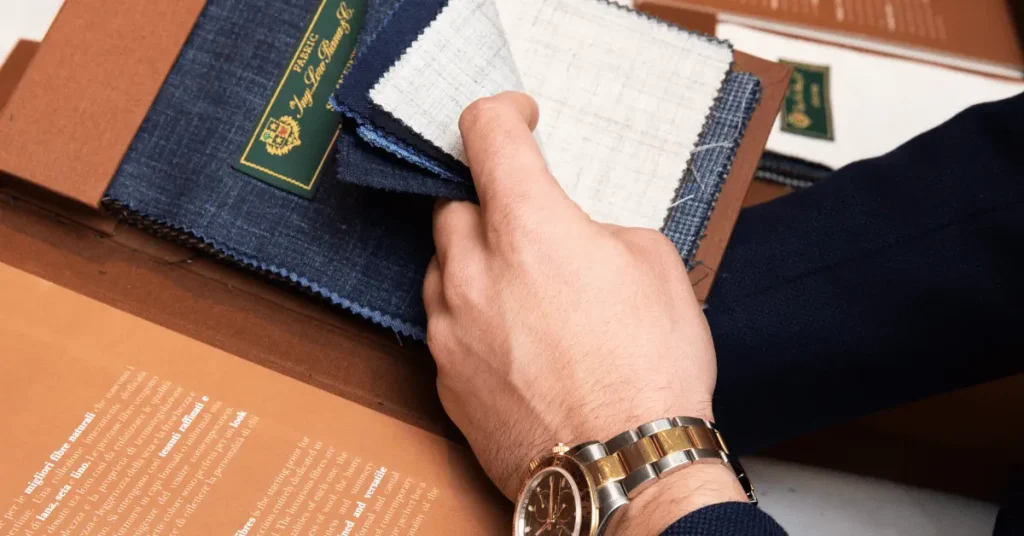
Fabrics, Fit and Styling Details for Semi-Formal Dressing
The quality of a semi-formal look depends significantly on the same elements that define any well-considered outfit: fabric, fit, and finishing. In a dress code that offers more flexibility than formal, these elements become more rather than less important, because there is less structure in the code itself to carry the outfit. The tailoring, the cloth, and the details are what make the difference between a look that reads as genuinely semi-formal and one that falls somewhere between dressed up and smartened up.
In Glasgow and across the UK, the season and the venue should always inform the fabric choice. The climate is genuinely variable, and a carefully chosen cloth that works across a full day, including an outdoor arrival and a heated interior, will serve the wearer considerably better than one chosen purely on appearance.
Semi-formal fabrics and finishes for men
For men, the most reliable semi-formal fabrics are those that hold a clean line while remaining comfortable across the full occasion. Lightweight wool and mid-weight wool suiting are strong year-round options. Flannel brings depth and character to autumn and winter events. Brushed cotton and refined cotton shirts work well for daytime occasions in warmer months. Merino knitwear can serve as an elegant alternative to a more formal shirt and tie combination at the right kind of event.
The finishing details of a men’s semi-formal outfit carry more weight than they are often given credit for. Footwear is the clearest signal of the level of formality the wearer has aimed for: Oxford shoes, Derby shoes, refined suede shoes, and well-chosen loafers all work well, while casual trainers or overly relaxed styles will bring the look down regardless of the quality of the rest of the outfit. A pocket square, a considered tie, quality cufflinks, and a well-chosen outerwear piece all contribute to the overall impression. The aim is deliberate and refined, not heavily decorated.
Semi-formal fabrics and finishes for women
For women, the strongest semi-formal fabrics combine structure with refinement. Structured suiting cloths, silk blouses, crepe dresses, wool blends, and tailored jackets in seasonally appropriate textures all work well depending on the event and the time of year. Knitwear in merino or fine wool can be a sophisticated layer for daytime occasions, while silk and crepe carry the weight of the occasion naturally for evening events.
The finishing details matter as much for women as for men. Footwear should be clearly appropriate for a polished occasion: refined heels, elegant flats, and loafers in quality materials all work well, while overly casual shoes or sandals are generally not at home in a semi-formal setting. Bags, jewellery, and outerwear should support the outfit rather than compete with it. Suited & Booted’s approach to bespoke womenswear ensures every element, from cloth to cut to finish, is chosen with the occasion in mind.
Common Mistakes to Avoid When Dressing Semi-Formal
The most common error with semi-formal dressing is defaulting too far toward casual. Denim, trainers, sportswear-inspired pieces, and overly relaxed knitwear are all common choices that fall below the semi-formal standard, however well they work in a smart casual context. The event has asked for a certain level of dressing, and meeting that level is both a practical requirement and a matter of respect for the occasion and the host.
Confusing semi-formal with black tie is the opposite error, and while it is less common, it is worth noting. A tuxedo or full evening gown at a semi-formal occasion can make the wearer look as misjudged as someone who has underdressed. Unless the invitation suggests an elevated or black-tie register, a well-tailored suit or an elegant dress in the right fabric will always be the more correct choice.
Dressing without reference to the venue, season, and time of day is another frequent mistake. A beautifully chosen outfit that is completely impractical for the setting, too light for a cold November evening, too warm for an outdoor summer wedding, too formal for a relaxed social occasion, will not serve the wearer well regardless of how good it looks on paper. The best semi-formal outfits are both elegant and appropriate.
Poor fit, inappropriate footwear, and accessories that feel too casual or too loud are the final categories of common error. Semi-formal dressing requires a certain level of care in the details. A jacket that does not sit correctly, trousers that are the wrong length, or shoes that belong in a different setting will undermine the rest of the outfit. See how these principles come together across different occasions in the Suited & Booted lookbook.
Build a Semi-Formal Wardrobe with Suited & Booted Glasgow
A semi-formal wardrobe built with purpose should be able to cover corporate events, weddings, evening receptions, client occasions, and the range of professional and social settings that make up an active working life in Glasgow and across the UK. The pieces should feel versatile, polished, and genuinely well-made: garments chosen for longevity, fit, and the ability to move between occasions without looking out of place.
Suited & Booted brings a bespoke approach to semi-formal attire for both men and women. For men, that may mean a tailored suit, refined separates, or a tuxedo where the occasion demands it, cut from premium cloth and fitted precisely to the individual. For women, it may mean tailored suiting, elegant dresses, formal separates, or modern womenswear designed with the full range of professional and social occasions in mind.
The value of expert tailoring in a semi-formal wardrobe is in the fit, the fabric, and the confidence that comes from knowing the outfit is right. Semi-formal dressing leaves enough flexibility to express genuine personal style; having the foundation pieces made to measure means that flexibility is always in the wearer’s favour.
Book an appointment with Suited & Booted Glasgow
Frequently Asked Questions
What is semi-formal dress code?
Semi-formal dress code is a polished and occasion-appropriate style of dressing that sits between smart casual and full formalwear. It combines tailored structure, refined fabrics, and a composed overall finish, and is commonly seen at weddings, corporate events, evening functions, and professional social occasions.
What is the difference between semi-formal and formal dress code?
Formal dress code is generally more structured, traditional, and elevated, often requiring a tuxedo for evening occasions or sharply tailored suiting for corporate events. Semi-formal allows slightly more flexibility in silhouette, fabric, and styling while still maintaining a clearly polished and occasion-ready appearance.
Is semi-formal the same as smart casual?
No. Semi-formal is more polished and structured than smart casual. Smart casual can include relaxed pieces elevated with a sharper layer or better footwear, while semi-formal asks for a consistently higher level of finish throughout the outfit. Jeans, casual trainers, and relaxed knitwear, which can work well in smart casual settings, are generally not appropriate for semi-formal occasions.
What is semi-formal attire for men?
Semi-formal attire for men usually includes a tailored suit, a crisp dress shirt, polished shoes, and considered accessories. For evening occasions, a darker suit in a refined cloth is generally the strongest choice. For daytime events, lighter tones and a more relaxed approach to shirt and tie choice can work well within the same basic framework.
Is a suit required for semi-formal men’s attire?
A suit is usually the safest and most appropriate option for semi-formal men’s attire, although a well-chosen tailored blazer with smart trousers can also work when styled with a crisp shirt, polished shoes, and a considered overall finish. The key is that the look feels clearly tailored and occasion-appropriate rather than assembled from casual staples.
What shoes should men wear with semi-formal attire?
Oxford shoes, Derby shoes, loafers, and refined suede shoes are all appropriate choices for semi-formal attire, depending on the occasion, the suit, and the overall tone of the event. The footwear should complement the tailoring and communicate the same level of care. Casual trainers, overly relaxed styles, or shoes that belong to a daytime or casual context are generally not appropriate.
What is semi-formal attire for women?
Semi-formal attire for women can include elegant dresses, tailored suits, jumpsuits, polished separates, or refined co-ords, styled with sophisticated footwear and understated accessories. The look should feel occasion-appropriate and clearly elevated, balancing elegance with structure without crossing into the formality of full eveningwear.
What should women wear for a semi-formal dress code?
Women dressing semi-formally can choose from elegant midi or full-length dresses, tailored trouser suits, jumpsuits in refined fabrics, polished co-ords, or structured separates. The most important factors are the quality of the fabric, the precision of the fit, and the overall impression of the outfit: composed, polished, and clearly chosen with the occasion in mind.
A suit is only as good as the cloth it is cut from. Fibre quality, weave structure, weight, drape, breathability, and the way a fabric holds its shape over time are all factors that determine whether a suit performs as well at the end of a long day as it does at the beginning. These are not details reserved for bespoke tailoring houses. They are the foundation of any genuinely considered suit purchase, regardless of price point or occasion.
This guide is written for anyone who wants to understand suit fabrics with real clarity, whether you are investing in a first proper suit, building a professional wardrobe, or choosing cloth for a specific occasion. With Glasgow and the wider UK in mind, we cover the key fabric types, the best suit material options for different seasons and uses, and the luxury cloth houses that set the standard in modern tailoring. The aim, as always, is a suit that looks refined, feels appropriate for the climate and context, and holds up beautifully over time.
What Is the Best Fabric for Suits?
There is no single answer to this question, and anyone who gives you one without asking about your lifestyle, climate, and intended use is not giving you useful guidance. The best fabric for suits depends on a combination of factors: how often the suit will be worn, the season and setting it is intended for, the level of formality required, and the structure the wearer wants the garment to hold.
That said, wool is widely and rightly considered one of the best materials for a suit. It offers a balance of drape, resilience, natural breathability, and long-term elegance that no other single fibre fully replicates. Wool suits recover well from being worn, respond to pressing, and hold a clean line through movement in a way that cotton, linen, or synthetic alternatives generally cannot match. For anyone building a wardrobe intended to last and to perform across a range of professional and formal occasions, wool is the natural starting point.
Other suit material types have their place: linen offers exceptional breathability for summer and casual tailoring, cotton and cotton-linen blends suit relaxed warm-weather dressing, silk blends add refinement for occasion wear, mohair brings crispness and crease resistance, and cashmere introduces softness for cooler-season pieces. The right choice is the one that performs best for the wearer’s specific purpose, not necessarily the softest, the finest, or the most expensive option available.
In the UK, where seasons genuinely vary and dressing often involves moving between outdoor and indoor settings, the relationship between fabric choice and climate is particularly relevant. A cloth that works beautifully on a mild Glasgow evening may feel oppressively heavy at a summer wedding, while a fabric that feels perfect in July may not provide enough warmth or structure for an autumn awards dinner. Getting this balance right is one of the clearest benefits of tailoring advice from someone who understands both the cloth and the context.
Best wool fabric for suits
Wool remains the foundation of luxury tailoring for good reason. It is a natural fibre that breathes, insulates, and recovers in ways that no synthetic can match, and the range of wool fabrics available within modern tailoring is considerably wider than most people realise.
Worsted wool is the most versatile option and the most widely used in business suits, formal suits, and year-round professional tailoring. It is tightly woven from combed fibres, which produces a smooth, refined surface with reliable durability. A well-made worsted wool suit holds its shape through regular wear, responds well to cleaning, and presents a clean, professional finish across a wide range of occasions.
For warmer months and summer tailoring, lightweight wool, tropical wool, high-twist wool, and fresco are the most relevant options. Tropical wool is loosely woven to allow airflow while retaining structure; high-twist wool uses tightly twisted yarns that create a degree of natural crinkle and resistance to creasing, making it a strong choice for travel and longer wear days; fresco is an open-weave cloth with excellent breathability that holds its shape well in heat. All three are popular choices for UK summer tailoring and destination dressing.
For the cooler months, flannel, tweed, and heavier worsted cloths come into their own. Flannel offers a soft, brushed finish with genuine warmth and a depth of character that lighter cloths cannot replicate. Tweed is a textured cloth with deep roots in British tailoring, particularly in Scotland, and is associated with country and sporting occasions as well as heritage formal dressing. Both are best suited to autumn and winter wear in the UK.
Super-number cloths, those rated Super 100s, 120s, 150s, and higher, indicate the fineness of the wool fibre used. Finer wool can feel softer and more luxurious against the skin, but it is not always the most practical choice for regular wear. Very high Super-number cloths tend to be more delicate and may show wear more quickly in a suit that is worn several times a week. The best wool fabric is the one chosen around season, frequency of wear, and occasion rather than the one with the highest number.
Common suit material types
Beyond wool, there are several suit material types that serve distinct purposes across different climates, dress codes, and occasions. Understanding their properties makes fabric selection considerably more purposeful.
Wool remains the most versatile option for drape, structure, breathability, and year-round tailoring. It is the natural first choice for professional suits, formal suits, and any situation where a sharp, lasting silhouette is required.
Linen
Linen is the most breathable summer fabric available and offers a relaxed, characterful elegance that is well-suited to casual and smart casual tailoring. Its natural tendency to crease is often treated as a feature rather than a flaw at relaxed occasions, but it is worth bearing in mind that linen may not be the right choice for every professional setting.
Cotton
Cotton and cotton-linen blends are softer and more relaxed than wool, and work well for summer suits, smart casual tailoring, and warm-weather separates. They breathe well and are comfortable in heat, but do not hold the same level of drape or structure as wool and may not be appropriate for formal or high-formality business settings.
Silk
Silk blends add a subtle sheen, softness, and refinement that makes them well-suited to occasion wear and evening tailoring. A small percentage of silk woven into a wool or linen cloth lifts the handle and adds a gentle luminosity without making the garment look overtly shiny.
Wool Blends
Wool-silk-linen blends combine the breathability of linen, the refinement of silk, and the structure of wool into a single cloth that performs particularly well in warm weather while maintaining a more luxurious finish than pure linen. These blends are among the strongest warm-weather choices for professional tailoring.
Mohair
Mohair blends are crisp, lightweight, and naturally crease-resistant, making them an excellent option for summer tailoring, travel suits, and occasions where a clean, polished appearance needs to be maintained through a long or busy day.
Cashmere
Cashmere blends introduce softness and warmth for cooler-season suits and elevated winter tailoring. A cashmere-wool blend can be a particularly luxurious choice for a winter suit or blazer intended for the most refined occasions.
Tweed and Flannel
Tweed and flannel are heritage fabrics with genuine character. Both offer warmth, texture, and a distinctly British tailoring aesthetic. Tweed is rooted in Scottish tradition and carries a particular association with country, ceremonial, and heritage formal occasions. Flannel brings softness and depth of tone to city suiting in the cooler months. Neither is a warm-weather fabric, and both are at their best when the season, setting, and occasion call for them.
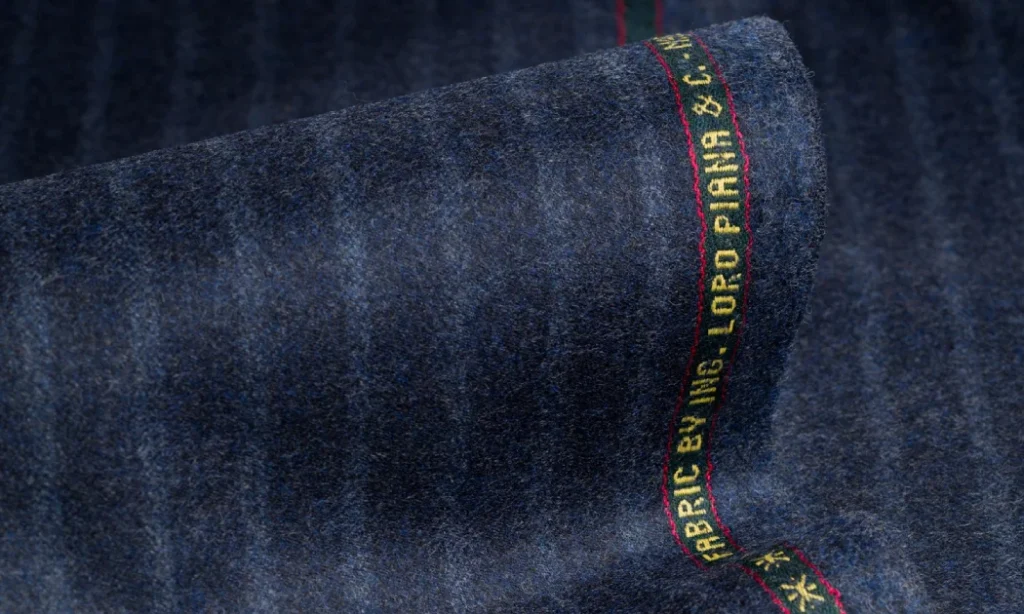
What are the Best Suit Fabric Brands in the World?
In bespoke and high-quality tailoring, the cloth house matters as much as the tailor. The best suit fabric brands are not simply labels on a bolt of cloth; they represent generations of expertise in fibre sourcing, spinning, weaving, finishing, and innovation. The fabric they produce sets the ceiling for what any suit can achieve, regardless of how skillfully it is cut.
The premium cloth houses that matter most to the quality of a finished suit are known for the consistency of their output, the refinement of their finishing, and the depth of their seasonal ranges. The brands covered below are those Suited & Booted has worked with directly and referenced as part of their own tailoring offer.
Italian suit fabric brands
Italian mills have long been associated with refined finishes, soft handle, lightweight cloths, elegant drape, and luxurious seasonal blends. The Italian approach to suiting cloth tends to prioritise comfort and movement alongside elegance, producing fabrics that feel as well as they look.
Loro Piana is one of the most prestigious fabric houses in the world, producing premium wools, cashmere blends, and lightweight spring and summer cloths that are consistently regarded as among the finest available anywhere. Their fabrics are known for exceptional softness, natural lustre, and long-term wearability, making them a reference point for luxury tailoring at the highest level.
Ermenegildo Zegna is another Italian name synonymous with exclusive cloth, elevated tailoring, and high-quality fibres. Zegna fabrics are used extensively in high-end ready-to-wear and bespoke tailoring, and their seasonal collections include a wide range of lightweight and luxury summer weights.
Solbiati is a specialist in warm-weather suiting cloths, particularly linen, cotton-linen blends, and summer tailoring fabrics. Their work in this space is highly regarded within the tailoring world, and their cloths are among the most refined options available for anyone seeking a linen or linen-blend suit for UK summer occasions.
Italian fabrics are often ideal for professionals who want comfort, ease of movement, softness, and a polished luxury finish. Lighter Italian cloths work particularly well for summer business suits, travel tailoring, destination dressing, and refined occasion wear where breathability and elegance need to work together.
British and European suit fabric brands
British and European mills have built their reputations on structure, heritage, durability, and performance across formal and professional tailoring. Where Italian cloths tend toward softness and drape, British and European fabrics often offer a sharper, more structured silhouette with greater depth of character and seasonal range.
Holland and Sherry is one of the most respected names in British cloth, with a history stretching back to 1836. Their range covers refined city suiting, luxury wool cloths, seasonal tailoring weights, and summer-weight sport coats, and their cloths are a benchmark for quality within the bespoke tailoring world. A suit cut in Holland and Sherry cloth carries a particular kind of authority that is difficult to replicate.
Dormeuil is a luxury cloth house known for refined business suits, wedding tailoring, spring and summer weights, and elevated occasion wear. Their fabrics offer a sophisticated balance of refinement and structure, and their seasonal ranges are consistently among the most considered available to bespoke tailors.
These British and European cloths provide the structure, depth, durability, and sharp silhouette that makes them especially well-suited to formal business wear, wedding suits, evening suits, and the more demanding end of the UK’s professional dress calendar. Heavier cloths, flannels, and textured weaves within these ranges come into their own in the cooler months, when a cloth with genuine weight and character is the right choice.
How to Choose the Best Suit Fabric for Hot Weather and Summer
Choosing a suit fabric for hot weather is fundamentally about balancing breathability, comfort, and structure. The suit needs to feel light and allow airflow without losing the shape that makes it look polished and professional. Getting this balance right is one of the clearest areas where expert fabric advice makes a meaningful difference.
The first consideration is the occasion. A summer business suit, a wedding suit, a travel suit, and a smart casual suit each require a different fabric choice. A fabric that works beautifully for a client meeting in a well-air-conditioned office may not be the right choice for an outdoor ceremony in the afternoon heat. Starting from the occasion rather than the fabric usually leads to a better decision. If you are looking for guidance on men’s casual tailoring for summer, Suited & Booted can help you find the right cloth for a more relaxed warm-weather wardrobe.
For summer suits where structure and formality matter, lightweight wool, tropical wool, and high-twist wool are the most reliable options. All three allow airflow while maintaining a sharp, polished appearance, and they hold their line through a full day’s wear in a way that most other summer fabrics cannot. They are the professional’s choice for summer business wear, formal occasions, and any setting where the suit needs to perform as well as it looks.
Linen suits for warm weather
Linen is highly breathable and carries a relaxed, natural elegance that is well-suited to summer tailoring. It is less formal in its presentation than wool and creases more readily, which makes it a better fit for smart casual occasions, garden events, outdoor weddings, and social dressing than for corporate settings or formal business wear.
Linen-blend suits for warm weather
Linen-wool, linen-silk, and wool-silk-linen blends offer the breathability of natural fibres alongside a smoother, more polished finish. These blends are among the strongest warm-weather choices for anyone who wants the comfort of a lighter cloth with a more refined, professional presentation. They are particularly well-suited to summer weddings, destination tailoring, and occasions that combine outdoor and indoor settings.
Mohair suits for warm weather
Mohair blends are a strong choice for warmer weather because they feel crisp, light, and naturally crease-resistant. The slight sheen of mohair also gives the suit a refined evening quality that works well for summer formal occasions and travel tailoring where a fresh appearance needs to be maintained through a long day or journey.
Cotton and cotton-blend suits for warm weather
Cotton and cotton-linen suits are comfortable in warm weather and work well for casual and smart casual settings. They do not offer the same drape, structure, or level of formality as wool, and are generally better suited to relaxed social occasions and informal professional environments than to high-formality business or formal event dressing. For those occasions, a tailored casual suit in a considered summer cloth is often the more versatile and elegant solution.
For Glasgow and the wider UK, it is also worth acknowledging that summer weather can change considerably throughout the day. A fabric chosen for the afternoon heat may need to function equally well on a cool evening, and layering, lining, and construction all contribute to how practical and adaptable a summer suit feels across a full day. A lightweight, thoughtfully constructed suit in the right cloth will always outperform an unlined or poorly finished garment that simply looks light on the hanger.
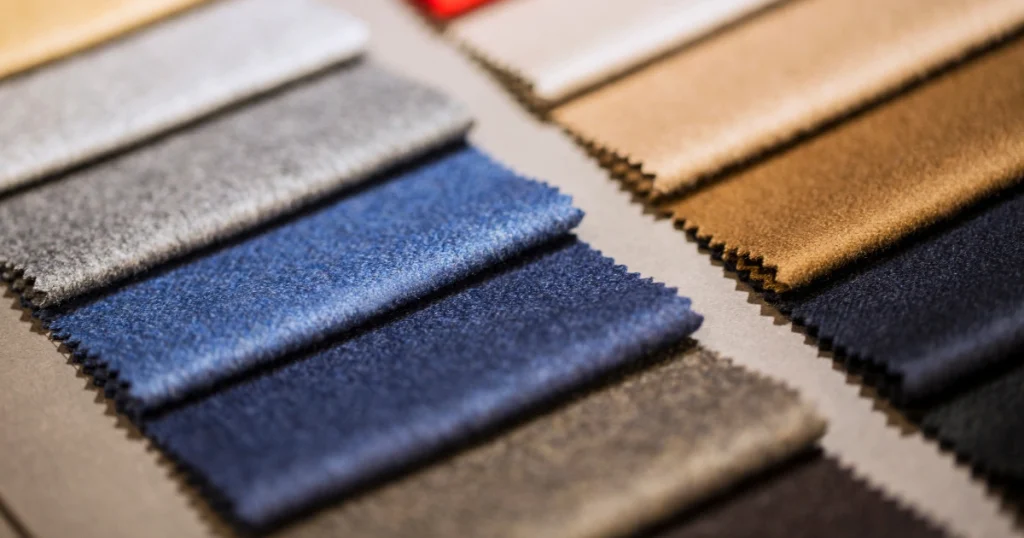
Common Mistakes to Avoid When Choosing the Best Suit Fabric for Hot Weather
Choosing a suit fabric on the basis of softness, price, or brand name alone is one of the most common errors in suit purchasing. A fabric that feels extraordinary in the hand may not be the most practical choice for regular professional wear, and a highly prestigious cloth house does not guarantee that a particular cloth is right for the season or occasion in question.
The Super-number trap is worth understanding. A very high Super number indicates fine, soft wool, but it does not indicate the most durable or practical choice. Super 150s and above can be delicate cloths that show wear quickly in a suit that is worn frequently. For a suit intended for regular business use, a Super 100s or 110s cloth in the right weave is often a stronger long-term investment than a finer cloth that requires more careful handling.
Very lightweight fabrics, while appealing in warm weather, may not provide sufficient structure for formal business settings. A cloth that feels appropriately light for a relaxed social occasion may read as insufficiently polished in a corporate or client-facing environment. The level of formality required by the setting should always be part of the fabric decision.
Heavy tweeds and flannels are excellent winter choices but genuinely unsuitable for summer weddings, warm-weather travel, or any occasion where the heat and the formality of the event are both working against the wearer. The best cloth wardrobe works across the seasons, not against them.
Pure linen, while beautiful for the right occasion, is not appropriate for every professional or formal setting. Its natural tendency to crease can work against a polished appearance in corporate or high-formality environments, and it is worth weighing the context before choosing linen for a suit that will be worn across a full working day.
Fashion-led fabrics that prioritise novelty over wearability are rarely a sound long-term investment. A suit is a considered purchase, and the cloth should be chosen for longevity, versatility, and the way it performs across real life, not simply for how it looks on a runway or in a single photograph.
Finally, lining, construction, and fit all affect how comfortable and elegant a suit feels in warm conditions. An unlined or half-lined jacket will breathe considerably better than a fully lined one, and a suit that is precisely fitted will always feel more comfortable and look more polished than one that compensates for fit with excess fabric. Cloth is only part of the picture.
Explore Suited & Booted’s lookbook
Choose the Best Suit Fabric with Suited & Booted Glasgow
Suited & Booted brings genuine expertise to the process of fabric selection as well as to the cut, construction, and fitting of the finished suit. Choosing between lightweight wool, tropical wool, high-twist wool, linen blends, cotton-linen cloths, mohair blends, silk blends, wool-silk-linen blends, flannel, tweed, and the various premium cloth houses that supply them is not a decision that benefits from being made alone.
The cloth houses that Suited & Booted works with include Loro Piana, Holland and Sherry, Solbiati, Zegna, and Dormeuil, names that represent the highest standard in luxury tailoring fabrics across both Italian and British traditions. Each of these houses produces cloths with distinct characters and seasonal specialisms, and the guidance available through a consultation means the right cloth for each client’s lifestyle, climate, and wardrobe can be identified with clarity.
Whether the requirement is a summer business suit, a wedding suit, a travel suit, a formal evening suit, or a smart casual garment that moves between professional and social settings, the fabric choice is where the quality of the finished result begins. A consultation with Suited & Booted ensures that choice is made with purpose.
Book an appointment with Suited & Booted Glasgow
Frequently Asked Questions
What is the best fabric for suits?
Wool is generally considered the best fabric for suits because it offers an excellent balance of structure, drape, breathability, and durability across different seasons and occasions. The most appropriate wool cloth will depend on the time of year, the intended use, and how frequently the suit will be worn.
What is the best material for a suit?
The best material for a suit is usually wool for versatility, structure, and long-term performance. For summer and warmer weather, lightweight wool, linen blends, mohair blends, and wool-silk-linen blends can all be excellent depending on the climate, dress code, and how formal the occasion requires the suit to be.
What is the best wool fabric for suits?
Worsted wool is one of the best wool fabrics for suits because it is smooth, durable, refined, and versatile across a wide range of professional and formal settings. For summer, lightweight wool, tropical wool, high-twist wool, and fresco are among the strongest warm-weather alternatives. For cooler months, flannel and tweed offer warmth, character, and a distinctly British tailoring quality.
What are the main suit material types?
The main suit material types include wool, worsted wool, lightweight wool, linen, cotton, silk, cashmere, mohair, flannel, and tweed, as well as blended fabrics such as wool-silk-linen and cotton-linen. Each offers a different balance of structure, breathability, softness, and durability depending on the intended season, occasion, and level of formality.
What is the best suit material for summer?
The best suit material for summer is generally lightweight wool, tropical wool, or high-twist wool for professional and formal settings. Linen blends, wool-silk-linen blends, and mohair blends are also strong warm-weather choices. Each of these fabrics allows airflow while maintaining the structure and polish expected of a well-dressed suit.
What is the best suit fabric for men?
For men, worsted wool is the most versatile and reliable suit fabric for professional and formal wear across most of the year. For summer, lightweight wool, tropical wool, high-twist wool, and linen blends offer breathability without sacrificing the sharp, polished appearance that a suit should carry.
What is the best suit fabric for women?
For women, the best suit fabric depends on the silhouette, season, and occasion. Wool, lightweight wool, silk blends, crepe, and structured suiting cloths all work well for tailored suits and polished separates. For warmer weather, linen blends, wool-silk-linen blends, and breathable suiting cloths in lighter weights are strong options that maintain refinement without adding unnecessary weight.
Formal dress code is one of those phrases that sounds clear until the invitation arrives. It suggests polish, but how much? It suggests structure, but does it require a suit, a tuxedo, a gown, a tailored dress, or something more flexible?
The answer depends on the setting. Formal dressing is not a single uniform. It is a standard. It asks for a higher level of presentation than smart casual or business casual, and it relies on tailoring, fabric, proportion to create authority.
For men and women, modern formal dressing should feel composed rather than stiff. The best formal outfits are not necessarily the most decorative or expensive. They are the ones that understand the occasion, fit precisely and create a clear, elegant silhouette.
In Glasgow and across the UK, formal dress codes often appear at corporate events, ceremonies, business dinners, weddings, evening functions and refined social occasions. The British climate adds another consideration: cloth weight, layering and outerwear matter almost as much as the clothes worn underneath.
This guide explains what formal dress code means for men and women, how it differs from smart formal, and how to dress with confidence for professional, social and evening settings.
What is Formal Dress Code?
Formal dress code is built around tailored structure, refined presentation and a higher level of occasion dressing. It is more polished than smart casual and more deliberate than standard businesswear.
The central principles are simple: sharper tailoring, better fabric, polished footwear and greater attention to detail. A formal outfit should look intentional from the first impression to the final detail. Jackets should sit correctly, trousers should fall cleanly, dresses should hold their shape, shoes should be appropriate, and accessories should support the outfit rather than distract from it.
Formalwear also carries a sense of respect for the setting. A corporate awards dinner, legal event, wedding, charity function, private reception or formal business occasion each asks the wearer to acknowledge the importance of the room.
Modern formal dressing should feel timeless and authoritative, but not old-fashioned. For men, this might mean a beautifully cut suit, a dress shirt and polished shoes, or a tuxedo where the occasion demands it. For women, it might mean an elegant dress, tailored suit, refined separates or eveningwear with a strong, composed silhouette.
The difference between looking dressed up and looking formal is discipline. Formal dressing leaves less room for carelessness. Fit, fabric and finish are doing the work.
Formal Dress Code for Men
Formal dress code for men usually begins with a tailored suit. Navy, charcoal, black and deeper seasonal tones are the most reliable choices, depending on the event and time of day. The suit should be worn with a dress shirt, polished shoes and, in many settings, a tie.
A formal business suit is not simply a work suit worn to a nicer event. The cloth, cut and styling need to carry more authority. A crisp shirt, controlled palette, well-chosen tie and polished leather shoes all matter. The jacket should sit properly through the shoulder, the sleeve length should be correct, and the trousers should break cleanly at the shoe.
For evening occasions, the level of formality may rise. A tuxedo or dinner suit becomes appropriate where the event is black tie or black tie-adjacent. This is a different category from a business suit. Satin or grosgrain lapels, a dress shirt, bow tie and formal shoes create a standard of eveningwear that a standard suit cannot quite replicate.
Luxury menswear is defined by proportion, fit and fabric rather than excess styling. A well-tailored suit in a quality cloth will always look stronger than a louder outfit that lacks discipline. The aim is confidence without noise.
Bespoke Men’s Tailoring Service
Formal Dress Code for Women
Formal dress code for women offers several strong options. Elegant dresses, tailored suits and polished separates can all be appropriate, depending on the setting.
For business events, corporate occasions and ceremonies, tailored suiting is often one of the most authoritative choices. A trouser suit or skirt suit in a refined cloth can feel professional, elegant and modern. The jacket should sit cleanly through the shoulder and waist, and the trouser or skirt should be cut to create a composed silhouette.
For evening functions, weddings and receptions, an elegant dress may be the natural choice. The formality will depend on the length, fabric, cut and styling. Silk, crepe, satin, fine wool and structured fabrics usually read more formal than lightweight casual materials.
Polished separates can also work when they are clearly elevated. A refined blouse with tailored trousers, a structured jacket with a formal skirt, or a silk top with evening-appropriate accessories can all meet the dress code when the finish is right.
The strongest formal womenswear looks modern rather than overdone. Premium fabrics, precise tailoring, refined footwear and understated accessories usually make a more lasting impression than heavy decoration. From boardroom to black tie, the principle is the same: the outfit should look deliberate, elegant and appropriate to the occasion.
Bespoke Women’s Tailoring Service
Formal vs Smart Formal: What Is the Difference?
Formal and smart formal are closely related, but the distinction is important. Formal is the more structured, polished and dressier option. Smart formal allows a slightly softer interpretation while still maintaining elegance.
A formal dress code usually implies a full suit, dress shirt and tie for men, or an elegant dress, tailored suit or elevated formalwear for women. For evening occasions, it may move toward tuxedos, darker tones, finer fabrics and more refined accessories.
Smart formal sits just below that level. It still requires polish, but it allows more flexibility in silhouette and styling. A tailored suit worn with a crisp shirt but less traditional accessories, refined separates, soft tailoring or a structured dress might all fit a smart formal setting.
The difference often comes down to the expected standard of the room. A formal corporate ceremony, black-tie dinner or wedding reception will usually require more structure. A business dinner, client event, private lunch or refined daytime function may allow smart formal.
Smart Formal Dress Code for Men
Smart formal for men offers a softer alternative to stricter formalwear while still requiring a sharp appearance. It can include a tailored suit, refined separates, a crisp shirt, lightweight layers and polished shoes.
A suit may still be the best option, but it does not always need the full formality of a traditional tie-and-shirt combination. Depending on the setting, a fine knit under a jacket, a beautifully cut shirt worn open at the collar, or tailored separates in complementary fabrics may work.
This dress code is particularly useful for business dinners, client events, receptions and premium social occasions in Glasgow where a polished look is expected but black tie would feel excessive.
The important point is that smart formal should not drift into business casual. The fabrics should be strong, the fit precise and the footwear polished. A relaxed element is allowed, but the final impression should still be elevated.
Smart Formal Dress Code for Women
Smart formal dress code for women can include tailored dresses, elegant suiting, refined blouses, polished separates and sophisticated footwear. It is less rigid than full formalwear, but it should still feel composed.
A tailored dress with elegant shoes, a trouser suit in a refined cloth, or polished separates with a structured jacket can all work well. The outfit should feel professional and elegant rather than casual office wear.
Smart formal is ideal for corporate events, business dinners, receptions and refined daytime occasions where professionalism and style need to sit together. It allows more personality than strict formal dressing, but not so much that the outfit loses its authority.
The safest approach is to build the look around one strong tailored element. That might be a blazer, a structured dress, a tailored trouser, or a jacket with a clean line. Accessories should be refined, and footwear should clearly belong to a smarter setting.
How to Dress Formally for Different Settings in Glasgow
Glasgow formalwear often requires thoughtful layering. A winter corporate dinner, a formal wedding, a ceremony or an evening reception may involve moving between cold streets, older buildings, hotel entrances and heated interiors. Cloth weight, outerwear and layering should be considered from the beginning.
Venue matters. A city hotel, private members’ setting, corporate event space, church, historic building or country house will each carry slightly different expectations. Time of day matters too. Daytime formal dressing often allows lighter colours and softer finishes, while evening formalwear usually leans darker, sharper and more polished.
Corporate, Social and Evening Occasions
Corporate events and award ceremonies often sit at the higher end of formal dressing. A darker suit, sharper tailoring and more controlled accessories will usually feel right. For women, this may be the moment for a stronger silhouette, a refined dress or elevated suiting.
Social and ceremonial occasions allow more interpretation. Weddings, receptions and formal daytime events may call for softer colours, elegant dresses, lighter cloths or more expressive accessories, provided the look remains polished.
Evening occasions often ask for the most elevated finish. Men may move toward darker suits or tuxedos depending on the dress code. Women may choose evening dresses, tailored formalwear or refined separates with more luxurious fabrics and accessories.
Fabrics, Fit and Accessories
For men, wool suiting remains the foundation. Mid-weight wool works across much of the year in the UK, while flannel brings warmth and depth in colder months. For women, silk, crepe, fine wool, satin and structured blends can all create a formal impression depending on the garment.
Fit is non-negotiable. Formal dressing depends on precision. A jacket that pulls, trousers that pool heavily, sleeves that are too long, or a dress that does not sit correctly will weaken the whole look. Tailoring is not a finishing touch; it is the foundation.
Accessories should complete the outfit rather than compete with it. Men should pay attention to ties, pocket squares, cufflinks, watches and shoes. Women should consider shoes, bags, jewellery and outerwear as part of the whole look.
Common Mistakes to Avoid with Formal Dress Codes
For men, common errors include poor tailoring, casual shoes, open collars where a tie is expected, overly relaxed fabrics or treating a business suit as eveningwear. A dark suit is useful, but it is not a tuxedo. The distinction matters.
For women, the mistakes often involve fabrics that are too casual, accessories that are too heavy-handed, dresses that feel more social than formal, or separates that look like standard office wear rather than occasion dressing.
Another mistake is ignoring season and venue. Lightweight fabrics can feel underdressed at winter evening events, while heavy cloths can feel uncomfortable or too severe for daytime occasions. Shoes also need to suit the setting. A formal look can be undermined quickly by footwear that belongs somewhere else.
The simplest test is whether the outfit looks composed from every angle. Formal dressing should not rely on one strong piece to carry everything else. The suit, dress, shoes, accessories and outerwear should all belong to the same level of formality.
Build a Formal Wardrobe with Suited & Booted Glasgow
A formal wardrobe should not be built around panic purchases. The best pieces are chosen with longevity, versatility and the wearer’s life in mind.
For men, that might mean a beautifully tailored suit, a dinner suit for black tie occasions, refined shirts, formal shoes and a coat that completes the look properly. For women, it might mean tailored suiting, elegant dresses, polished separates and formalwear that can move from boardroom to evening with the right styling.
Suited & Booted Glasgow brings a bespoke approach to formalwear, tuxedos and tailored womenswear. The value is in expert fitting, premium cloths and garments shaped around the individual rather than the hanger.
A formal wardrobe built well should offer confidence. It should make dressing for business events, ceremonies, dinners, weddings and evening occasions feel straightforward rather than uncertain.
To invest in formalwear shaped by craftsmanship, fit and lasting elegance, book a consultation with Suited & Booted Glasgow.
FAQs
What is formal attire for men?
Formal attire for men typically includes a tailored suit, dress shirt, tie and polished shoes. For more elevated evening occasions, especially black tie events, it may require a tuxedo or dinner suit. The key is precise fit, refined fabric and a composed overall finish.
What is formal attire for women?
Formal attire for women typically includes an elegant dress, tailored suit or polished separates, paired with refined footwear and understated accessories. The right choice depends on the occasion, but the outfit should feel sophisticated, structured and appropriate for business events, ceremonies or evening occasions.
What is the difference between formal and smart formal?
Formal is usually more structured, traditional and dressy. Smart formal allows a slightly softer or more contemporary interpretation without losing polish. The difference usually comes down to the venue, occasion, tailoring, fabric and level of finish expected.
Can women wear trousers for a formal dress code?
Yes. Women can wear trousers for a formal dress code when they are tailored and styled as part of a sophisticated suit or elevated separates. Wide-leg trousers, fine wool suiting, silk blouses and structured jackets can all look highly formal when the fit and fabric are right.
Is a tuxedo considered formal dress code for men?
Yes. A tuxedo is one of the clearest examples of formal dress code for men, especially for evening events, weddings, black tie dinners and elevated social occasions. It is more formal than a standard business suit and should be styled with the correct eveningwear details.
Is formal dress code appropriate for work?
Yes, formal dress code can be appropriate for high-level professional settings, ceremonies, corporate events and client-facing occasions where authority and polish are expected. It is more elevated than everyday office wear and should look deliberate rather than routine.
Is formal dress code suitable for evening wear in Glasgow?
Yes. Formal dress code is highly suitable for evening wear in Glasgow, especially for black tie events, formal dinners, weddings, award ceremonies and upscale social occasions. Darker tones, sharper tailoring, refined fabrics and considered outerwear usually work particularly well for evening settings.
The words casual and smart casual appear on invitations, workplace guidance and restaurant dress codes with surprising frequency, and yet they are two of the easiest terms to misread. Casual does not mean careless. Smart casual does not mean simply adding a blazer to whatever you were already wearing. Casual and smart casual ask for something subtler: an understanding of context, quality and fit.
In Glasgow, where the same day might move from a client meeting to dinner in the city centre, a private event, or a relaxed weekend plan, knowing how to calibrate the level of polish is genuinely useful. The aim is not to overdress, but to dress with intention. A well-cut jacket, a refined knit, a good trouser, a polished shoe or an elegant dress can change the entire outfit.
This guide explains the difference between casual and smart casual dress codes for men and women, with a focus on refined dressing, luxury fabrics and modern tailoring.
What Is Smart Casual Dress Code?
Smart casual is a dress code that combines relaxed clothing with polished elements. It sits between everyday casualwear and formal dressing, which is why it is so often used for professional, social and evening settings.
The important word is balance. Smart casual should not look like office wear without a tie, nor should it look like weekend clothing with better shoes. It is a considered middle ground: relaxed enough to feel modern, but sharp enough to look appropriate in a well-dressed room.
For men and women, the strongest smart casual outfits usually have one or two structured elements. That might be a tailored jacket, a beautifully cut trouser, a fine knit, a refined blouse, a silk detail, or footwear that clearly belongs to a smarter setting. The rest of the outfit can remain comfortable and easy, provided the overall impression feels intentional.
In a Glasgow context, smart casual works especially well for business lunches, client meetings, dinners, private events, smarter restaurants and social occasions where formalwear would feel too much, but standard casualwear would not feel enough.
Casual-wear Tailoring Services in Glasgow
Smart Casual Dress Code for Men
Smart casual dress code for men is built around elevated staples. Lightweight blazers, open-collar shirts, fine-knit polos, tailored trousers, chinos and refined footwear are the foundation. The look should feel relaxed, but still structured.
A navy or charcoal blazer worn with tailored chinos and an open-collar shirt is one of the most reliable interpretations. Dark denim may be acceptable in some settings, but it should be clean, well-fitted and styled with pieces that raise the formality of the outfit.
What separates smart casual menswear from everyday casual dressing is not complication. It is discipline. The lines should be clean, the cloth should hold its shape, and the shoes should not undermine the rest of the look. Suede loafers, polished leather shoes, refined boots or minimal leather trainers can all work, depending on the venue.
In Glasgow, where weather often requires an extra layer, outerwear deserves the same attention as the rest of the outfit. A tailored overcoat, refined raincoat or well-cut wool jacket will always look stronger than a practical layer chosen as an afterthought.
Smart Casual Dress Code for Women
Smart casual dress code for women allows for more interpretation, but the principle is the same: comfort with polish. Soft tailoring, elegant dresses, refined blouses, polished separates and sophisticated accessories all sit comfortably within the dress code.
A tailored trouser with a silk blouse, a structured blazer over a simple dress, or fine knitwear worn with a clean skirt or wide-leg trouser can all work. The outfit should feel modern and comfortable, but still clearly more elevated than standard casualwear.
The fabric often determines the level of formality. Silk, fine wool, crepe, merino, structured cotton and quality blends tend to read as more polished than casual jersey or thin, unstructured fabrics. The silhouette matters as well. A relaxed shape can still feel smart when the cut is deliberate and the proportions are balanced.
Footwear is especially important. Elegant flats, loafers, low heels, refined boots or minimal leather trainers can all work, but they need to suit the setting. A shoe that feels too casual can pull the whole outfit down.
Casual Dress Code for Men and Women
Casual dress code is more relaxed than smart casual, but it should still feel neat, intentional and appropriate. This is where many people get it wrong. For men, casual dressing might include premium T-shirts, polos, knitwear, chinos, refined denim, casual overshirts or lightweight jackets. For women, it might include elegant tops, relaxed dresses, soft tailoring, refined denim, knitwear or easy separates. In both cases, the outfit should prioritise comfort, ease and versatility while still looking considered.
In Glasgow, casual dressing still benefits from structure. The city’s restaurants, hotels, business environments and social settings often reward a little more effort than the word casual might suggest. A good casual wardrobe should work for daytime plans, informal meetings, relaxed lunches, travel and weekend social occasions without looking thrown together.
| Dress Code | Best For | Key Pieces | Overall Impression |
| Casual | Daytime plans, informal meetings, relaxed social occasions | Premium T-shirts, knitwear, refined denim, chinos, relaxed dresses | Comfortable, neat and intentional |
| Smart Casual | Business lunches, dinners, client meetings, smarter venues | Blazers, tailored trousers, refined blouses, fine polos, polished shoes | Relaxed but clearly elevated |
| Formal | Corporate events, ceremonies, black tie-adjacent occasions | Suits, dresses, eveningwear, polished tailoring | Structured, authoritative and occasion-led |
The strongest casual outfits are often quiet. They do not rely on logos, trends or obvious statements. They rely on cloth, proportion and an understanding of where the outfit is being worn.
How to Dress Well for Different Settings in Glasgow
To dress well for different setting in Glasgow, it’s important to consider four things: the venue, the time of day, the people you are meeting and the level of formality implied by the occasion.
A relaxed daytime plan can usually take a softer interpretation of casual dressing. A business lunch or client meeting needs more structure. A dinner, private event or smarter venue often calls for smart casual, even if the invitation does not spell it out. When in doubt, it is usually better to be slightly more polished than slightly underdressed.
The weather matters too. British dressing is often about layers, and Glasgow is no exception. Lightweight wool, brushed cotton, merino knitwear, linen blends and well-cut outerwear allow an outfit to remain comfortable without losing its elegance. A good coat or jacket can be the difference between a finished look and one that feels compromised by practicality.
Daytime, Evening and Professional Occasions
Daytime casual can be relaxed, but it should still be clean and considered. For men, this might mean refined denim or chinos with knitwear, a polo or a well-cut overshirt. For women, it might mean a relaxed dress, tailored trouser, elegant knit or polished separates.
Evening settings usually ask for more. Restaurants, private dinners, theatre plans, hotel bars and smarter social occasions tend to suit smart casual rather than pure casual. The shift does not need to be dramatic. Better shoes, a tailored layer, a darker palette or a more refined fabric can move the outfit into the right register.
Professional occasions require the most careful balance. Smart casual is especially useful for modern workplaces, business lunches and client meetings because it allows personality and comfort without losing polish. A blazer, tailored trouser, refined blouse, fine knit or structured dress can all create the right impression.
Context is everything. The same dark denim that works at a relaxed dinner may not work for a client event. The same trainer that looks refined with a casual weekend outfit may feel too informal in a smarter venue. Smart casual is not a list of fixed items; it is the ability to judge the room before you enter it.
Fabrics, Fit and Finishing Touches
Fabric is one of the clearest differences between ordinary casualwear and elevated casual dressing. Lightweight wool, brushed cotton, merino knitwear, linen blends and silk touches all have a level of refinement that makes even simple outfits feel considered.
Fit is just as important. A casual outfit can still be beautifully fitted. In fact, it often needs to be. Without the structure of formalwear, the cut of each piece becomes more visible. Trousers should sit properly, knitwear should not collapse at the shoulder, shirts should not pull or billow, and dresses should move cleanly without looking shapeless.
Finishing touches often decide whether an outfit works. Footwear, accessories, grooming and outerwear are not secondary details. They carry a large part of the overall impression. For men, a polished shoe, refined trainer, quality belt or good outer layer can shift the entire outfit. For women, footwear, jewellery, bags and outerwear can make a simple look feel complete. The aim is not to accessorise heavily, but to finish the outfit with the same level of intention as the main garments.
Common Mistakes About Smart Casual and Casual Dress Codes to Avoid
Smart casual and casual dressing should feel relaxed, but never careless. In Glasgow’s restaurants, workplaces, private events and social settings, presentation still matters, even when the dress code allows more ease. The aim is to look comfortable, modern and composed, with clothing that feels intentional rather than overly formal or too relaxed.
A common mistake is treating casual as an excuse for poor fit, tired fabrics or sportswear-led styling. Overly distressed denim, worn trainers, shapeless knitwear and garments without structure can quickly make an outfit feel underdressed. Smart casual, in particular, depends on balance: relaxed pieces should be elevated with tailoring, premium cloth, polished footwear and considered finishing touches.
Another mistake is overlooking the role of outerwear and layering, especially in Glasgow’s changing weather. A beautifully cut coat, refined knitwear, structured jacket or tailored overshirt can define the full look and make casual dressing feel more polished. The most successful casual and smart casual outfits are understated and refined, with craftsmanship, fit and fabric doing the work rather than obvious styling or short-lived trends.
Build a Luxury Casual Wardrobe with Suited & Booted Glasgow
A strong casual wardrobe is not built around trends. It is built around pieces that fit well, wear beautifully and move easily between work, travel, evenings and relaxed social occasions.
For men and women, that might mean tailored trousers, soft jackets, refined knitwear, versatile shirts, elegant dresses, premium casual separates and outerwear that looks as good as it performs. These are the pieces that make dressing well feel simple.
Suited & Booted Glasgow brings a tailoring-led approach to smart casual and elevated casualwear. The value is not only in the garment itself, but in the way it is cut, fitted and chosen for the person wearing it. Proportion, fabric and lifestyle all matter.
A luxury casual wardrobe should feel effortless, but it should never be accidental. With the right guidance, it becomes possible to dress for professional settings, social occasions, travel and evenings with the same sense of clarity and refinement.
To build a wardrobe shaped around craftsmanship, fit and modern elegance, book a consultation with Suited & Booted Glasgow.
FAQs
What is the difference between casual and smart casual?
Casual is more relaxed and informal, while smart casual introduces more structure, sharper styling and a more polished overall finish. Casual should still feel neat and intentional, but smart casual is better suited to business lunches, dinners, client meetings and smarter venues.
What is a smart casual dress code for men?
A smart casual dress code for men combines relaxed staples with tailored pieces. Blazers, open-collar shirts, fine-knit polos, chinos, tailored trousers and polished footwear all work well. The look should feel modern and relaxed but still refined enough for a professional or evening setting.
What is a casual dress code for men?
A casual dress code for men usually includes premium T-shirts, polos, knitwear, chinos or refined denim. The key is to style these pieces in a way that still feels neat and intentional. Good fit, quality fabric and appropriate footwear make the difference.
Can jeans be worn for a smart casual dress code for men?
Yes, dark and well-fitted jeans can work for smart casual when styled with more elevated pieces such as a blazer, fine knitwear, an open-collar shirt or polished footwear. Distressed, faded or overly casual denim is much harder to make work in a smart casual setting.
What is a smart casual dress code for women?
Smart casual for women combines comfort and polish through refined silhouettes, elevated fabrics and considered styling. Tailored trousers, soft blazers, elegant dresses, refined blouses, knitwear and sophisticated accessories can all work well.
What is a casual dress code for women?
A casual dress code for women usually includes elegant tops, relaxed dresses, tailored separates, knitwear or refined denim. The outfit should feel comfortable and easy, but still polished enough for daytime plans, relaxed social occasions or informal professional settings.
Can women wear trousers for a smart casual dress code?
Yes. Tailored trousers are one of the most versatile and elegant options for a smart casual dress code. They work especially well with blouses, knitwear, soft tailoring, elegant flats or minimal heels.
What shoes work best for a smart casual dress code?
The best smart casual shoes are polished and understated. For men, loafers, suede shoes, refined boots or clean leather trainers can work. For women, elegant flats, loafers, minimal heels, refined boots or smart leather trainers may be appropriate depending on the outfit and setting.
Is smart casual appropriate for work?
Yes, smart casual is often appropriate for modern workplaces because it balances professionalism, comfort and polished presentation. It is especially useful for business lunches, client meetings and offices where full formalwear is not required.
Is smart casual suitable for evening wear in Glasgow?
Yes, smart casual is often ideal for evening wear in Glasgow, especially for dinners, private events, hotel bars and upscale social settings where a polished but not overly formal look is expected.
Black tie is a formal evening dress code typically worn at events such as galas, weddings, and award ceremonies. For men, it means a dinner suit with a bow-tie, while women typically wear a full-length gown or tailored tuxedo suit. If the invitation says “black tie optional” or “preferred,” a black suit with a black tie can be acceptable, but a tuxedo with a bow tie is better.
It is worth understanding why. Black tie is a dress code with genuine history behind it, and the British version of that history is particularly layered. The rules have loosened over the decades, but the underlying standard has not disappeared; it has simply become more nuanced. Getting it right means understanding not just what to wear, but what the occasion is actually asking of you.
Whether this is your first black tie event or you are refreshing your approach before a significant occasion, this guide covers everything you need to dress with confidence.
What Is the Black Tie Dress Code?
Black tie sits in the middle of the formal dress code hierarchy, below white tie, which is reserved for the most ceremonial occasions, and well above business formal or smart casual. It is the dress code of evening events: charity balls, corporate award ceremonies, private members’ dinners, and formal weddings. When an invitation specifies black tie, it requires a specific standard of dress rather than simply “smart” or “formal” attire.
The name comes from the black bow tie worn as part of the men’s dinner suit which is a detail that has remained constant even as the rest of the dress code has evolved. That consistency is worth noting: the bow tie is not a stylistic suggestion, it is part of what black tie actually means. The dress code sits in a category of its own, and treating it as equivalent to ‘smart’ or ‘formal’ misses the point. It signals occasion, intention, and a specific kind of elegance.
Black Tie Dress Code Checklist
If your outfit could be worn to a daytime event, it isn’t black tie. Black tie requires a clearly defined level of evening formality, not just a smart or well-dressed look. Here’s what is expected for a true black tie dress code:
For men:
- Dinner suit (black or dark blue)
- White dress shirt
- Black bow tie
- Formal shoes (patent leather or polished Oxfords)
For women:
- Floor-length gown or formal evening outfit
- Elegant shoes (heels or refined flats)
- Evening-appropriate accessories
How Does Black Tie in the UK Differ?
Britain has a long and well-developed relationship with formal dressing, and black tie means something slightly different depending on where you are and what kind of event you are attending.
In London, the formal calendar is broad and varied. City dinners, theatre galas, charity fundraisers, and private club events all call for black tie at various points throughout the year, and the expectation in most of these settings is relatively traditional. A classic, well-executed look will always be right. That said, London’s more contemporary social scene, particularly in creative and fashion-forward circles, has more appetite for personal expression within the dress code, and a considered departure from convention is unlikely to raise an eyebrow.
Scotland has its own proud tradition of formal dressing. Burns Night suppers, Highland balls, and the charity dinner circuit in Glasgow and Edinburgh are occasions where black tie is worn with genuine enthusiasm. At many Scottish events, Highland dress, a kilt with Prince Charlie jacket, dress sporran, and appropriate accessories, is not just accepted but celebrated as an entirely correct interpretation of the dress code. If you have the connection and the outfit, wearing it is always the right call.
A few other UK-specific points worth bearing in mind:
- British evenings are cold, often unexpectedly so. A well-chosen formal overcoat or evening wrap is both practical and part of a properly considered look – particularly for older venues where the heating may not quite match the grandeur of the surroundings.
- Older institutions, livery halls, members’ clubs, and heritage venues sometimes carry additional dress expectations beyond the standard black tie code. Always check venue guidance when the setting is a historic one.
- ‘Black Tie Preferred’ or ‘Black Tie Optional’ on an invitation means the host would like guests to dress formally but is not making it a strict requirement. The safer choice is always to dress up rather than down.
Black Tie For Men vs Women
Men
The dinner suit is the non-negotiable starting point. Black or midnight blue are the classic choices. Black was historically considered the more correct option under artificial light, which is why it has endured. A dinner suit should never be mistaken for a dark business suit. However well cut and expensive, a business suit belongs to daytime and office contexts. In a room full of correctly dressed guests, the difference is immediately apparent.
The complete black tie look for men:
- A white dress shirt with an optional pleated or marcella bib front — not a standard business shirt
- A black bow tie, self-tied where possible – a long tie, however formal, is incorrect
- A cummerbund or waistcoat to cover the waistband
- Black patent leather or highly polished Oxford shoes
There is real room for personality within these foundations, and the British formal scene has always had an appreciation for the well-dressed individual who brings something considered to the dress code. Velvet dinner jackets are particularly at home through the autumn and winter months. Rich, deep tones (forest green, claret, maroon, midnight blue) are well-established alternatives to black and read exceptionally well at evening events. A white dinner jacket, while less common in the UK than in warmer climates, has its place at the right occasion.
Do not underestimate the accessories as these are the details that separate a good black tie look from a genuinely impressive one. A pocket square chosen and folded with intention, quality cufflinks, and a dress watch that is appropriately scaled and unshowy. They should be considered in advance, not assembled at the last minute.
Fit, ultimately, is what makes or breaks any formal look. British tailoring has a centuries-long tradition of understanding this, and it remains as true today as it ever was. A dinner suit that sits correctly on the body, through the shoulder, the chest, and the trouser, will always outperform a more expensive one that does not.
Women
Women have considerably more interpretive freedom within black tie than men, and the British formal scene has become increasingly receptive to a wide range of choices. The floor-length gown remains the most traditional and universally appropriate option, but it is far from the only one.
Things to consider when dressing for a UK black tie event:
- Fabric is the most important signal of formality. Silk, satin, chiffon, and velvet all read as genuinely evening-appropriate. Lighter, more casual fabrics, however elegant the cut, will not carry the same weight.
- Footwear deserves practical thought. Many of the UK’s most prestigious event venues – livery halls, country houses, historic estates – have uneven floors, stone staircases, or cobbled approaches. A lower heel or an elegant flat in a quality material is not a compromise; it is sensible dressing for the context.
- Plan for the cold. A wrap, pashmina, or formal evening coat is almost always needed for a British evening event. It should be chosen as part of the look, not grabbed as an afterthought.
- The bag should be small. An evening clutch is the appropriate choice. A structured minaudiere or a simple satin pouch both work well. A large handbag, regardless of its quality, works against the formality of the occasion.
- Jewellery can be as understated or as bold as personal style dictates. What matters is that the choice is intentional and that it reads as evening-appropriate.
The tailored suit for women has become an eye-catching choice at British black tie events, particularly in London, where a sharply cut wide-leg suit in the right fabric sits very comfortably within the dress code. A well-constructed formal jumpsuit can also work at more contemporary occasions. Both require the same thing: clear intention, quality fabric, and an impeccable fit.
Black Tie Footwear and Accessories
The finishing details of a black tie look are where the overall impression is either reinforced or quietly undermined. A quick guide:
- Men’s shoes: black patent leather Oxfords are the traditional correct choice. Highly polished black calf leather is the practical modern equivalent. The shoe should be clean, sleek, and free of any casual or daytime detailing.
- Women’s shoes: heels remain the classic expectation, but at the kind of historic venues that define much of the UK’s formal calendar, an elegant flat or low heel in a luxurious material is entirely appropriate and often the more sensible choice.
- Men’s accessories: understated and deliberate. A quality set of cufflinks, a tie pin if the look calls for it, and a dress watch that does not compete for attention. This is not the occasion for novelty.
- Women’s accessories: the jewellery can carry as much presence as the occasion demands. The bag should not so keep it small, keep it evening-appropriate.
What Not to Wear to a Black Tie Event
The most common errors at black tie events are not the result of bad taste – they are the result of underestimating the specific standard the dress code sets. A quick checklist of what to avoid:
- Men: a business suit, regardless of how dark or well-fitted it is. A long tie in place of a bow tie. An open collar. Shoes that belong to daytime wear. Any item that reads as office or casual.
- Women: a cocktail dress that is too short for the occasion. Fabrics that read as casual or summery. Anything that would feel more appropriate at a smart dinner than a formal gala.
- For both: the simplest test is to ask whether the outfit could reasonably be worn to a daytime or work context. If the answer is yes, it is not right for black tie.
Styling Tips for Getting Black Tie Right
Getting black tie right is not complicated when the approach is deliberate. A few principles that apply consistently:
- Start with fit: No other factor has a greater impact on how a formal look reads. This is as true of a gown as it is of a dinner suit.
- Give yourself time: The best black tie looks are planned, not assembled at the last minute. Fabric, fit, and accessories all benefit from advance thought.
- Read the occasion: A City awards dinner at a Mayfair hotel has a different register to a Scottish charity ball in a country estate, and your styling can reflect that distinction without compromising on formality.
- When in doubt, go classic: A properly tailored dinner suit or an elegant full-length gown will never be out of place at a black tie event. Confidence in the choice matters as much as the choice itself.
Suited & Booted’s consultations are designed exactly for this: to ensure the result is considered, appropriate, and genuinely impressive rather than merely presentable. Black tie is one of the few occasions in modern life that asks you to dress with real intention – and when you get it right, it shows.
To prepare for your next formal occasion with complete confidence, book your appointment with Suited & Booted and arrive knowing the look is exactly right.
FAQs About the Black Tie Dress Code
Can women wear trousers to a black tie event?
Yes, and increasingly it is one of the strongest choices available. A well-tailored tuxedo suit with wide-leg trousers, in the right fabric and with the right accessories, is a sophisticated option that sits firmly within the black tie dress code. The key is that every element of the look signals evening formality. When it is done well, a trouser suit at a black tie event is often the most striking look in the room.
What does ‘Black Tie Optional’ mean?
It means the host would prefer black tie but will not enforce it. For men, a dinner suit is still the better choice and while a dark suit with a white shirt and tie is acceptable, but it will read as a lower level of formality in a room where most guests have dressed to the code. For women, a sophisticated formal dress at an appropriate length is a reasonable alternative to a full-length gown. In both cases, the intention should be clearly evening-appropriate.
Can I wear colour to a black tie event?
Absolutely and British formal dressing has always had an appreciation for the well-chosen coloured dinner jacket or evening gown. For men, midnight blue has long been considered the most elegant alternative to black, while jewel tones such as bottle green, claret, and deep sapphire are all well-established choices. For women, colour is essentially unrestricted, provided the silhouette, fabric, and overall look remains unmistakably formal.
Are sequins and embellishment appropriate for black tie?
For women, yes and without reservation. Sequins, beading, embroidery, and metallic fabrics are evening materials by definition, and they are entirely at home at a black tie event. British black tie occasions, particularly in London, tend to embrace embellishment well. The aim is considered rather than excessive and an embellished gown in a clean, well-fitted silhouette will always read better than one where the decoration is doing the heavy lifting.
What is the difference between black tie and white tie?
White tie is the most formal dress code in British life, and it appears in a relatively narrow set of contexts: state banquets, royal occasions, the most prestigious university balls, and certain historic formal dinners. For men, it requires a tailcoat, white waistcoat, and white bow tie which is a very different proposition from the black tie dinner suit. For women, it traditionally calls for a full-length ballgown and formal gloves. If you are invited to a white tie event, the invitation will make it explicit. Black tie is the dress code you will encounter for the vast majority of formal evening occasions throughout your life.
Britain has one of the great tailoring traditions in the world, and yet the sheer range of options available, suit styles, fits, construction methods, lapel types, collar details, can make it genuinely difficult to know where to begin. Whether you are buying your first proper suit or taking stock of a wardrobe that has accumulated over time, having a clear framework makes the decisions considerably more purposeful.
Understanding these distinctions is about more than aesthetics. The right combination of cut, lapel, and construction tells a story about the wearer and their understanding of occasion, their attention to detail, and the kind of professional or social impression they want to make. In a country where suiting carries real cultural weight, from the City of London to the formal events calendar in Scotland, that story matters.
This guide is a practical reference for anyone who wants to dress well and dress intentionally which is why we cover every key variable from suit type to collar construction, with the UK firmly in mind.
The 5 Different Types of Suits
The word ‘suit’ is doing a lot of work. It covers everything from a City two-piece to a Highland formal occasion, and the distinctions between suit types are not merely stylistic as they carry real differences in formality, occasion suitability, and what they communicate about the person wearing them. In the UK, where professional dress codes span City finance, law, creative industries, and Scotland’s own rich ceremonial traditions, understanding those differences has practical value.
Suit Type |
Best For |
Formality |
| Two-Piece | Business & Daily Wear | Medium |
| Three-Piece | Formal Work. & Events | High |
| Double-breasted | Statement & Formal Looks | High |
| Dinner Suit | Black Tie Events | Very High |
| Morning Suit | Formal Daytime Events | Very High |
-
The Two-Piece Suit
The two-piece, jacket and matching trousers, is the foundation of professional dressing in Britain and the suit most people own first. Its versatility is genuine rather than a sales point: the same well-cut two-piece can carry a person from a client meeting to a formal dinner, depending on how it is worn and what it is made from.
In the UK, fabric weight is as important as cut. A mid-weight wool works across most professional settings year-round and holds its shape through the variable British seasons. Lighter options such as fresco or hopsack come into their own through spring and summer, while heavier cloths suit the colder months. A quality two-piece in the right cloth is one of the most considered purchases a professional can make.
-
The Three-Piece Suit
The addition of a matching waistcoat transforms the register of the suit entirely. The three-piece is a distinctly more authoritative look as it reads as deliberate and assured in a way that the two-piece, however well made, simply does not. In City and legal contexts, where formal credibility still matters at the highest level, the three-piece has never gone out of fashion. It also offers a practical advantage: the jacket can come off without undermining the look, which matters at long events or during summer months.
For high-stakes meetings, formal dinners, and award ceremonies, a three-piece in a quality cloth is one of the strongest professional choices available.
-
The Double-Breasted Suit
The double-breasted suit, characterised by its overlapping front panels and paired rows of buttons, has enjoyed a genuine resurgence over the past decade and now sits comfortably in the modern luxury wardrobe. It is a more structured and visually assertive look than the single-breasted equivalent, with a heritage rooted in British naval and military dress that gives it a particular resonance in this country.
It works best for formal evening occasions and situations where the intention is to make a considered impression. In London’s corporate and social circles, a well-cut double-breasted suit in a dark cloth is among the most compelling choices available.
-
The Dinner Suit (Tuxedo)
The dinner suit is a category apart. Distinguished by its satin or grosgrain lapels, an optional matching side stripe on the trousers, and a formality reserved exclusively for black tie occasions, it is not a substitute for a dark business suit and should never be treated as one. The distinction is visible immediately in any room where the dress code is being properly observed.
Across the UK, from charity galas at London’s great institutions to Scottish black tie dinners with their own particular traditions, a well-chosen dinner suit is a wardrobe essential for anyone who takes their formal social life seriously. Our suggestion? Get your tuxedo tailored so it fits you perfectly.
-
The Morning Suit
The morning suit, tailcoat, waistcoat, and striped trousers, occupies the top of the formal daytime dress code. It is the correct attire for Royal Ascot, formal weddings, and certain ceremonial occasions, and it is worth knowing what it involves even if the occasions that call for it are relatively rare. Outside of those specific contexts, it does not cross over into professional or evening wear.
6 Important Men & Women’s Suit Styles
Beyond suit type, there are distinct stylistic traditions in suiting that have developed over generations, each reflecting a different approach to construction, silhouette, and occasion. Understanding these helps both with buying decisions and with reading what a suit is actually communicating. For women, the range of options has expanded considerably because suiting now offers a full spectrum of silhouettes that carry genuine professional and formal authority.
1. British (Bespoke) Style
This is home territory. British tailoring which is characterised by a suppressed waist, structured shoulders, a defined chest, and a longer jacket length represents the benchmark against which most other suiting traditions are measured. The Savile Row tradition codified these principles, but they run through British tailoring at every level, from the great houses of Mayfair to independent tailors working in cities across the country.
The British style conveys precision and authority, and it suits the formal end of both London’s corporate world and Scotland’s ceremonial occasions with equal conviction. It is also, arguably, the most flattering cut available as the suppressed waist and structured shoulder create a silhouette that works across a wide range of body types.
2. Italian Style
Where British tailoring is structured and precise, Italian suiting is softer, lighter, and more fluid. The construction is typically less padded, often unlined or half-lined, and the silhouette moves more naturally with the body. The result is a suit that feels less formal in its register but no less considered and it is the difference between authority and elegance.
Italian suiting is widely appreciated in London’s fashion-forward professional circles and works particularly well through the warmer months, when a lighter construction is both more comfortable and more appropriate. For those who find British tailoring too rigid in its structure, Italian suiting offers a compelling middle ground.
3. American Style
The American suit takes a noticeably different approach: a natural, unpadded shoulder, a roomier cut through the chest and waist, and a more relaxed overall silhouette. It is the least structured of the three main traditions and sits in a more informal professional register than either the British or Italian styles.
In the UK context, American-style suiting works well for relaxed professional environments and smart casual occasions. It is less suited to the formal end of the British professional calendar, but for those who find more structured cuts uncomfortable or overly formal for their day-to-day context, it offers a practical and well-considered alternative.
4. The Tailored Blazer and Trouser Suit
For women, the tailored blazer and trouser suit is the most versatile and widely applicable professional option. The fit principles are straightforward but non-negotiable: the jacket must follow the shoulder line precisely, sit cleanly through the body without pulling, and the trousers should fall with an appropriate break at the shoe. When these conditions are met, and they require either fortunate proportions or proper tailoring, the blazer and trouser suit is one of the most authoritative looks available in professional dressing.
5. The Skirt Suit
The skirt suit remains a strong option in formal and client-facing professional contexts and carries a traditional authority that the trouser suit has not entirely displaced. Hem length and fabric choice are the two variables that most significantly affect how the look reads: a knee-length skirt in a structured cloth sits in a formal register, while shorter cuts or lighter fabrics shift it toward something more casual. In City, legal, and formal client-facing environments, the skirt suit remains a very considered choice.
6. The Trouser Suit as Evening Wear
The trouser suit has become a genuinely well-accepted option at formal evening events across the UK, including black tie occasions, when it is made from the right fabric and worn with properly considered accessories. This shift has been particularly visible in London, where fashion-forward suiting for women at formal occasions is increasingly the norm rather than the exception. The fabric must carry the weight of the occasion. For example, a wide-leg trouser suit in a heavy silk or fine crepe reads as formal in a way that a lighter or casual cloth simply will not.
The 4 Main Types of Suit Fits
Of all the variables covered in this guide, fit has the greatest impact on how a suit looks and what it communicates. The same garment in two different fits can signal entirely different things about its wearer and no quality of fabric or refinement of construction will compensate for a suit that does not sit correctly on the body. This is the principle that underpins the entire tradition of British tailoring.
-
Slim Fit
The slim fit sits closer to the body throughout with a narrower chest, a more pronounced waist suppression, and a tapered trouser leg. It is a contemporary silhouette that works best on lean frames and suits a professional environment where a modern, current look is the right register. In London’s financial and creative sectors, slim fit has been the dominant professional cut for well over a decade and remains widely worn.
-
Regular (Classic) Fit
The regular or classic fit offers comfortable room through the chest, waist, and leg while maintaining a clean, balanced silhouette. It is the most versatile fit across body types and occasions, and it is the starting point for most bespoke tailoring precisely because it provides the right foundation for proper adjustment. When cut well and fitted correctly, a classic fit suit is one of the most enduring and reliable professional looks available.
-
Relaxed Fit
The relaxed fit carries more volume through both the jacket and the trousers and has grown significantly in presence within contemporary luxury fashion. When it works, when the fabric is clearly exceptional and the construction is deliberate, it reads as confident and considered. When the quality is not there to carry the extra volume, it simply reads as a poor fit. In the UK market, the relaxed fit works best as a clear and intentional luxury choice rather than a default.
-
Bespoke and Made-to-Measure
Britain has one of the great tailoring traditions in the world, and the distinction between bespoke and made-to-measure is worth understanding clearly:
- Bespoke tailoring means the suit is constructed entirely from a pattern made specifically for the individual. The pattern is created from scratch through a process of measurement, cutting, and fitting, and every element of the suit. Everything from the canvas and the cloth to the button stance and the collar roll is built for that person alone. This is the highest standard of tailoring available, and it is what Savile Row built its global reputation on.
- Made-to-measure starts from an existing base pattern and adjusts it to the individual’s measurements. The result fits significantly better than an unaltered off-the-rack suit and allows a meaningful degree of personalisation in cloth and detail.
Both are superior to buying off the rack without alteration. The UK’s tailoring tradition, from the houses of Mayfair to the independent tailors working in London, Glasgow, and beyond, means that access to properly fitted suiting is well-established at every level of investment.
4 Types of Suit Jackets
The jacket defines the suit. Variations in its construction, button stance, and overall silhouette have a significant effect on the formality of the look and the contexts in which it works. Getting the jacket right is the foundation on which everything else is built.
-
Single-Breasted
The single-breasted jacket, a single row of buttons, typically one to three, is the most common construction and the most versatile. It works across the full range of professional occasions and, in the right fabric, crosses into black tie territory as a dinner jacket. The two-button version is the most universally appropriate for professional wear, though the one-button has its advocates for a cleaner, more contemporary line.
-
Double-Breasted
The double-breasted jacket’s overlapping front panels and two parallel rows of buttons create a more structured and formally assertive look. It has deep roots in British tailoring, the shape echoes the naval and military dress from which it descended, and its current resurgence in luxury menswear feels entirely natural in this context. Worn with peak lapels and a quality cloth, a double-breasted jacket is one of the strongest formal options available.
-
The Blazer
The blazer is technically distinct from a suit jacket in that it is not part of a matched set because it is a standalone jacket worn with trousers in a different cloth or colour. The navy blazer with grey flannel trousers is perhaps the most British of all smart casual combinations, rooted in a tradition that runs from Oxbridge common rooms to London members’ clubs. A quality blazer is among the most useful garments in a professional wardrobe, offering a level of formality that sits comfortably between the suit and casual dress.
-
The Dinner Jacket
The dinner jacket is the formal evening jacket distinguished by its satin or grosgrain lapels, worn exclusively with matching dress trousers and reserved for black tie occasions. It does not cross over into daytime or casual professional wear, and it should not be treated as though it does. The lapel style, typically peak or shawl, is the most immediately visible signal of the dinner jacket’s evening formality, and it is one of the details that makes black tie dressing so legible to those who understand it.
The 3 Suit Lapel Types
The lapel is the most visible structural detail on any jacket, and it shapes the overall formality and personality of the look more than almost any other single element. Understanding lapel types is one of the quickest ways to develop a more informed eye for suiting.
-
Notch Lapel
The notch lapel features a V-shaped cut where the lapel meets the collar. This is the most common lapel type on professional suits worldwide and the default choice on most ready-to-wear and made-to-measure suiting. It is versatile, appropriate, and unobtrusive across a wide range of professional occasions. For anyone building a suit wardrobe from scratch, notch lapels on a single-breasted jacket are the most reliable starting point.
-
Peak Lapel
The peak lapel points upward and outward toward the shoulder, creating a more assertive and visually striking silhouette. It is the more formal of the two standard lapel types and is the natural choice for double-breasted jackets and dinner jackets. In British tailoring, the peak lapel has a particular association with Savile Row’s more structured and commanding cuts. It conveys authority and confidence, and it rewards a jacket that is cut and fitted to carry it.
-
Shawl Lapel
The shawl lapel is a single, unbroken curved line from collar to button so no notch, no peak, no interruption. It is found almost exclusively on dinner jackets and smoking jackets and belongs firmly in the category of evening wear. Elegant and quiet in its effect, the shawl lapel is one of the most distinctive signals in formal dressing that a jacket is intended purely for evening occasions.
3 Suit Collar Types You Should Know
The collar is the quieter detail and it is less immediately striking than the lapel, but one that those with a trained eye will notice. It determines how the jacket sits on the shoulder, how it frames the shirt and tie, and how refined the finished look feels at close quarters.
-
The Standard Collar
The standard collar sits flat against the shirt collar with minimal shaping and is found on the vast majority of ready-to-wear suits. It is functional, consistent, and appropriate across most professional contexts. Not a detail that draws attention, but not one that should.
-
The Melton Collar
The Melton collar is a slightly rolled, softer collar construction that is closely associated with the British bespoke tailoring tradition. It gives the jacket a more relaxed and refined drape at the neck, less pressed, more lived-in in the best sense, while maintaining full formal credibility. It is one of the details that separates a jacket with genuine craft behind it from one that simply looks well made, and it is the kind of thing that a fellow wearer of good suits will notice.
-
The Mandarin (Band) Collar
The Mandarin or band collar removes the traditional collar fold entirely, sitting close to the neck with a minimal or absent lapel. It appears on contemporary and fashion-forward suiting and works well in creative professional and smart casual contexts where a clean, modern aesthetic is the right register. It is not appropriate for traditional corporate environments or formal occasions, but for the right setting and the right person, it offers a distinctive and considered alternative to the standard construction.
When Should You Choose Tailoring Over Off-the-Rack?
Off-the-rack suits can work for convenience, but tailoring ensures a precise fit that significantly improves how a suit looks and feels.
If you are attending an important event, working in a client-facing role, or investing in long-term wardrobe pieces, made-to-measure or bespoke tailoring offers a noticeably higher standard.
Choosing the Right Suit for the Occasion
Every variable covered in this guide, suit type, stylistic tradition, fit, jacket construction, lapel, collar, interacts with every other. A peak lapel double-breasted suit in a dark flannel communicates something entirely different from a relaxed single-breasted jacket in a summer hopsack, and both are correct in their own context. The skill is not in knowing every detail but in understanding how the details combine and what they say together.
A useful framework for UK dressing:
- City and formal corporate settings: British or Italian construction, classic or slim fit, notch or peak lapels, mid-weight wool. The standard here is conservative and quality-led.
- Formal evening and black tie occasions: dinner suit, peak or shawl lapels, immaculate fit, satin or grosgrain details. No substitutions.
- Smart casual and creative professional environments: blazer or relaxed-fit suit, softer construction, American or contemporary Italian cut. Context determines how far the formality can be relaxed.
- Seasonal fabric considerations: mid-weight wool year-round as the foundation; fresco and hopsack for spring and summer; flannel and tweed for autumn and winter formal occasions.
In the UK, knowing your context is as important as knowing your cut. The City of London’s conservative standards and Glasgow’s smart but more relaxed business culture call for different calibrations of the same principles. A consultation with Suited & Booted ensures every element, from style and fit to lapel and collar, is chosen with precision and purpose, and that the result is right for the specific occasion and environment. Book your appointment to get started.
FAQs About Suit Types and Styles
What is the difference between a suit and a blazer?
A suit is a matched set, jacket and trousers (and sometimes a waistcoat), cut from the same cloth and intended to be worn together. A blazer is a standalone jacket worn with non-matching trousers, typically in a complementary colour or texture. The blazer is generally less formal than a suit and sits more naturally in smart casual and business casual contexts, though a quality blazer worn with well-chosen trousers can carry real professional weight.
What suit lapel is most formal?
Peak lapels are the most formally assertive of the standard types, followed by notch lapels. Shawl lapels are inherently formal but belong exclusively to evening wear as they are not appropriate for daytime or standard professional dressing. For a business suit, notch lapels are the conventional choice; for a double-breasted jacket or a dinner jacket, peak lapels are the natural one.
What suit fabrics work best for the UK climate?
The UK’s seasons call for a more considered approach to cloth than many other markets:
- Mid-weight wool (10-12oz): the most versatile year-round choice. Holds its shape, breathes reasonably well, and works across professional and formal occasions in all but the most extreme temperatures.
- Fresco and hopsack: open-weave wools that offer excellent breathability for spring and summer while maintaining the structure expected of professional suiting.
- Linen and linen blends: relaxed and breathable for the warmer months, though better suited to smart casual contexts than formal City environments.
- Flannel and tweed: heavier cloths that come into their own in autumn and winter. Flannel in particular has a distinctly British formality that suits both City and country house occasions.
What is the difference between bespoke and made-to-measure?
Bespoke means the suit is built entirely from a pattern created for the individual from scratch where every measurement, every structural decision, every finishing detail is made specifically for that person. It is the highest standard of tailoring available and the tradition that Savile Row made world-famous. Made-to-measure uses an existing base pattern adjusted to the individual’s measurements, with a degree of choice in cloth and details. Both produce a result that is significantly superior to an unaltered off-the-rack suit. For anyone serious about their professional wardrobe, either represents a meaningful and lasting investment.
