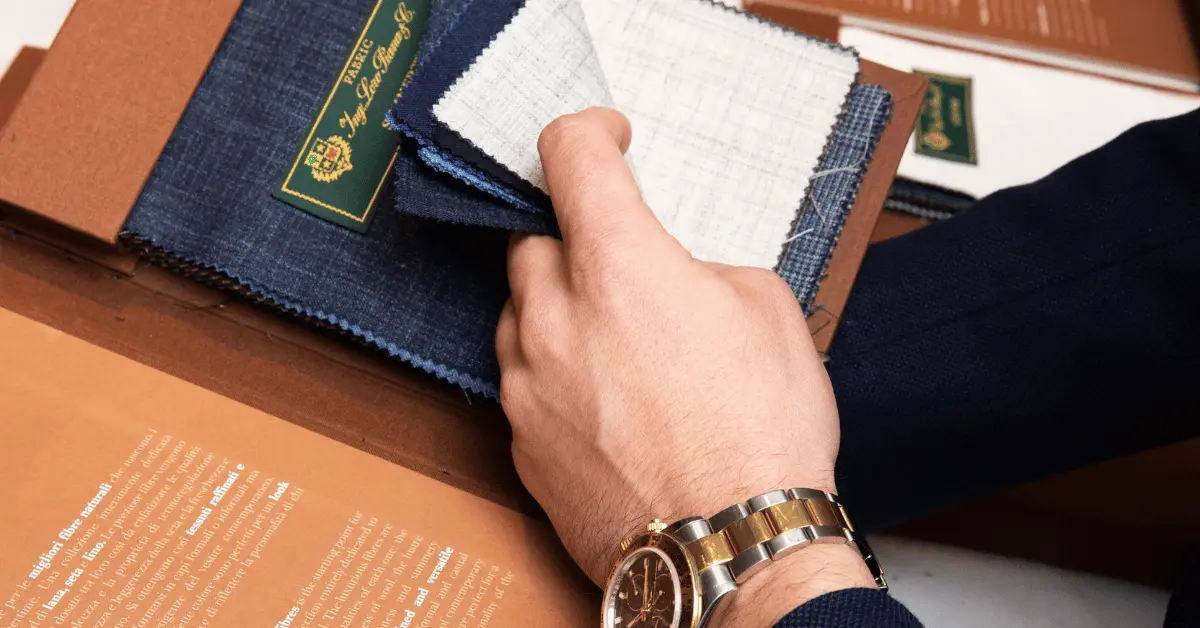
A suit is only as good as the cloth it is cut from. Fibre quality, weave structure, weight, drape, breathability, and the way a fabric holds its shape over time are all factors that determine whether a suit performs as well at the end of a long day as it does at the beginning. These are not details reserved for bespoke tailoring houses. They are the foundation of any genuinely considered suit purchase, regardless of price point or occasion.
This guide is written for anyone who wants to understand suit fabrics with real clarity, whether you are investing in a first proper suit, building a professional wardrobe, or choosing cloth for a specific occasion. With Glasgow and the wider UK in mind, we cover the key fabric types, the best suit material options for different seasons and uses, and the luxury cloth houses that set the standard in modern tailoring. The aim, as always, is a suit that looks refined, feels appropriate for the climate and context, and holds up beautifully over time.
What Is the Best Fabric for Suits?
There is no single answer to this question, and anyone who gives you one without asking about your lifestyle, climate, and intended use is not giving you useful guidance. The best fabric for suits depends on a combination of factors: how often the suit will be worn, the season and setting it is intended for, the level of formality required, and the structure the wearer wants the garment to hold.
That said, wool is widely and rightly considered one of the best materials for a suit. It offers a balance of drape, resilience, natural breathability, and long-term elegance that no other single fibre fully replicates. Wool suits recover well from being worn, respond to pressing, and hold a clean line through movement in a way that cotton, linen, or synthetic alternatives generally cannot match. For anyone building a wardrobe intended to last and to perform across a range of professional and formal occasions, wool is the natural starting point.
Other suit material types have their place: linen offers exceptional breathability for summer and casual tailoring, cotton and cotton-linen blends suit relaxed warm-weather dressing, silk blends add refinement for occasion wear, mohair brings crispness and crease resistance, and cashmere introduces softness for cooler-season pieces. The right choice is the one that performs best for the wearer’s specific purpose, not necessarily the softest, the finest, or the most expensive option available.
In the UK, where seasons genuinely vary and dressing often involves moving between outdoor and indoor settings, the relationship between fabric choice and climate is particularly relevant. A cloth that works beautifully on a mild Glasgow evening may feel oppressively heavy at a summer wedding, while a fabric that feels perfect in July may not provide enough warmth or structure for an autumn awards dinner. Getting this balance right is one of the clearest benefits of tailoring advice from someone who understands both the cloth and the context.
Best wool fabric for suits
Wool remains the foundation of luxury tailoring for good reason. It is a natural fibre that breathes, insulates, and recovers in ways that no synthetic can match, and the range of wool fabrics available within modern tailoring is considerably wider than most people realise.
Worsted wool is the most versatile option and the most widely used in business suits, formal suits, and year-round professional tailoring. It is tightly woven from combed fibres, which produces a smooth, refined surface with reliable durability. A well-made worsted wool suit holds its shape through regular wear, responds well to cleaning, and presents a clean, professional finish across a wide range of occasions.
For warmer months and summer tailoring, lightweight wool, tropical wool, high-twist wool, and fresco are the most relevant options. Tropical wool is loosely woven to allow airflow while retaining structure; high-twist wool uses tightly twisted yarns that create a degree of natural crinkle and resistance to creasing, making it a strong choice for travel and longer wear days; fresco is an open-weave cloth with excellent breathability that holds its shape well in heat. All three are popular choices for UK summer tailoring and destination dressing.
For the cooler months, flannel, tweed, and heavier worsted cloths come into their own. Flannel offers a soft, brushed finish with genuine warmth and a depth of character that lighter cloths cannot replicate. Tweed is a textured cloth with deep roots in British tailoring, particularly in Scotland, and is associated with country and sporting occasions as well as heritage formal dressing. Both are best suited to autumn and winter wear in the UK.
Super-number cloths, those rated Super 100s, 120s, 150s, and higher, indicate the fineness of the wool fibre used. Finer wool can feel softer and more luxurious against the skin, but it is not always the most practical choice for regular wear. Very high Super-number cloths tend to be more delicate and may show wear more quickly in a suit that is worn several times a week. The best wool fabric is the one chosen around season, frequency of wear, and occasion rather than the one with the highest number.
Common suit material types
Beyond wool, there are several suit material types that serve distinct purposes across different climates, dress codes, and occasions. Understanding their properties makes fabric selection considerably more purposeful.
Wool remains the most versatile option for drape, structure, breathability, and year-round tailoring. It is the natural first choice for professional suits, formal suits, and any situation where a sharp, lasting silhouette is required.
Linen
Linen is the most breathable summer fabric available and offers a relaxed, characterful elegance that is well-suited to casual and smart casual tailoring. Its natural tendency to crease is often treated as a feature rather than a flaw at relaxed occasions, but it is worth bearing in mind that linen may not be the right choice for every professional setting.
Cotton
Cotton and cotton-linen blends are softer and more relaxed than wool, and work well for summer suits, smart casual tailoring, and warm-weather separates. They breathe well and are comfortable in heat, but do not hold the same level of drape or structure as wool and may not be appropriate for formal or high-formality business settings.
Silk
Silk blends add a subtle sheen, softness, and refinement that makes them well-suited to occasion wear and evening tailoring. A small percentage of silk woven into a wool or linen cloth lifts the handle and adds a gentle luminosity without making the garment look overtly shiny.
Wool Blends
Wool-silk-linen blends combine the breathability of linen, the refinement of silk, and the structure of wool into a single cloth that performs particularly well in warm weather while maintaining a more luxurious finish than pure linen. These blends are among the strongest warm-weather choices for professional tailoring.
Mohair
Mohair blends are crisp, lightweight, and naturally crease-resistant, making them an excellent option for summer tailoring, travel suits, and occasions where a clean, polished appearance needs to be maintained through a long or busy day.
Cashmere
Cashmere blends introduce softness and warmth for cooler-season suits and elevated winter tailoring. A cashmere-wool blend can be a particularly luxurious choice for a winter suit or blazer intended for the most refined occasions.
Tweed and Flannel
Tweed and flannel are heritage fabrics with genuine character. Both offer warmth, texture, and a distinctly British tailoring aesthetic. Tweed is rooted in Scottish tradition and carries a particular association with country, ceremonial, and heritage formal occasions. Flannel brings softness and depth of tone to city suiting in the cooler months. Neither is a warm-weather fabric, and both are at their best when the season, setting, and occasion call for them.
What are the Best Suit Fabric Brands in the World?
In bespoke and high-quality tailoring, the cloth house matters as much as the tailor. The best suit fabric brands are not simply labels on a bolt of cloth; they represent generations of expertise in fibre sourcing, spinning, weaving, finishing, and innovation. The fabric they produce sets the ceiling for what any suit can achieve, regardless of how skillfully it is cut.
The premium cloth houses that matter most to the quality of a finished suit are known for the consistency of their output, the refinement of their finishing, and the depth of their seasonal ranges. The brands covered below are those Suited & Booted has worked with directly and referenced as part of their own tailoring offer.
Italian suit fabric brands
Italian mills have long been associated with refined finishes, soft handle, lightweight cloths, elegant drape, and luxurious seasonal blends. The Italian approach to suiting cloth tends to prioritise comfort and movement alongside elegance, producing fabrics that feel as well as they look.
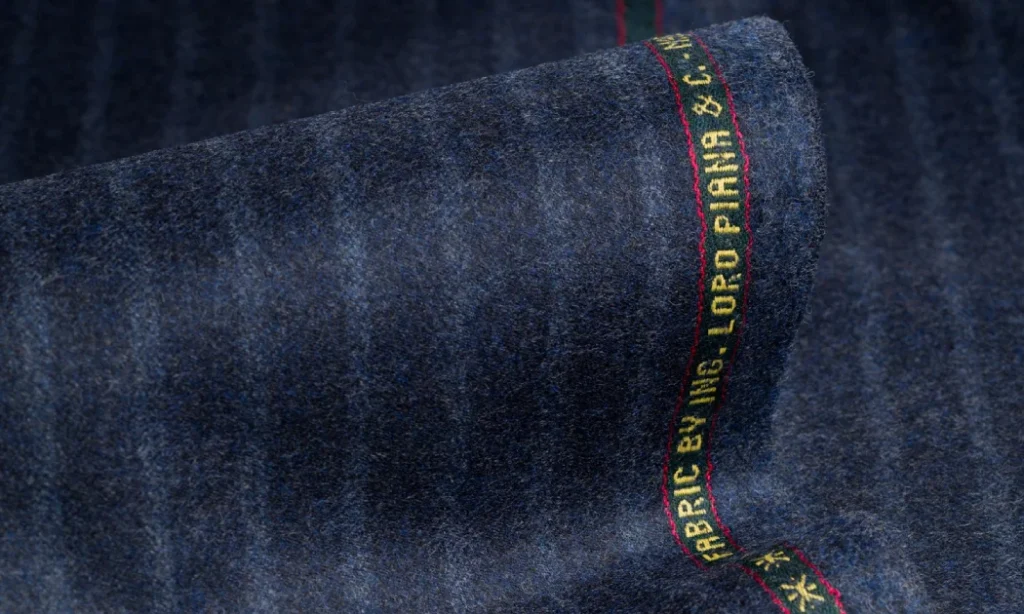
Loro Piana is one of the most prestigious fabric houses in the world, producing premium wools, cashmere blends, and lightweight spring and summer cloths that are consistently regarded as among the finest available anywhere. Their fabrics are known for exceptional softness, natural lustre, and long-term wearability, making them a reference point for luxury tailoring at the highest level.
Ermenegildo Zegna is another Italian name synonymous with exclusive cloth, elevated tailoring, and high-quality fibres. Zegna fabrics are used extensively in high-end ready-to-wear and bespoke tailoring, and their seasonal collections include a wide range of lightweight and luxury summer weights.
Solbiati is a specialist in warm-weather suiting cloths, particularly linen, cotton-linen blends, and summer tailoring fabrics. Their work in this space is highly regarded within the tailoring world, and their cloths are among the most refined options available for anyone seeking a linen or linen-blend suit for UK summer occasions.
Italian fabrics are often ideal for professionals who want comfort, ease of movement, softness, and a polished luxury finish. Lighter Italian cloths work particularly well for summer business suits, travel tailoring, destination dressing, and refined occasion wear where breathability and elegance need to work together.
British and European suit fabric brands
British and European mills have built their reputations on structure, heritage, durability, and performance across formal and professional tailoring. Where Italian cloths tend toward softness and drape, British and European fabrics often offer a sharper, more structured silhouette with greater depth of character and seasonal range.
Holland and Sherry is one of the most respected names in British cloth, with a history stretching back to 1836. Their range covers refined city suiting, luxury wool cloths, seasonal tailoring weights, and summer-weight sport coats, and their cloths are a benchmark for quality within the bespoke tailoring world. A suit cut in Holland and Sherry cloth carries a particular kind of authority that is difficult to replicate.
Dormeuil is a luxury cloth house known for refined business suits, wedding tailoring, spring and summer weights, and elevated occasion wear. Their fabrics offer a sophisticated balance of refinement and structure, and their seasonal ranges are consistently among the most considered available to bespoke tailors.
These British and European cloths provide the structure, depth, durability, and sharp silhouette that makes them especially well-suited to formal business wear, wedding suits, evening suits, and the more demanding end of the UK’s professional dress calendar. Heavier cloths, flannels, and textured weaves within these ranges come into their own in the cooler months, when a cloth with genuine weight and character is the right choice.
How to Choose the Best Suit Fabric for Hot Weather and Summer
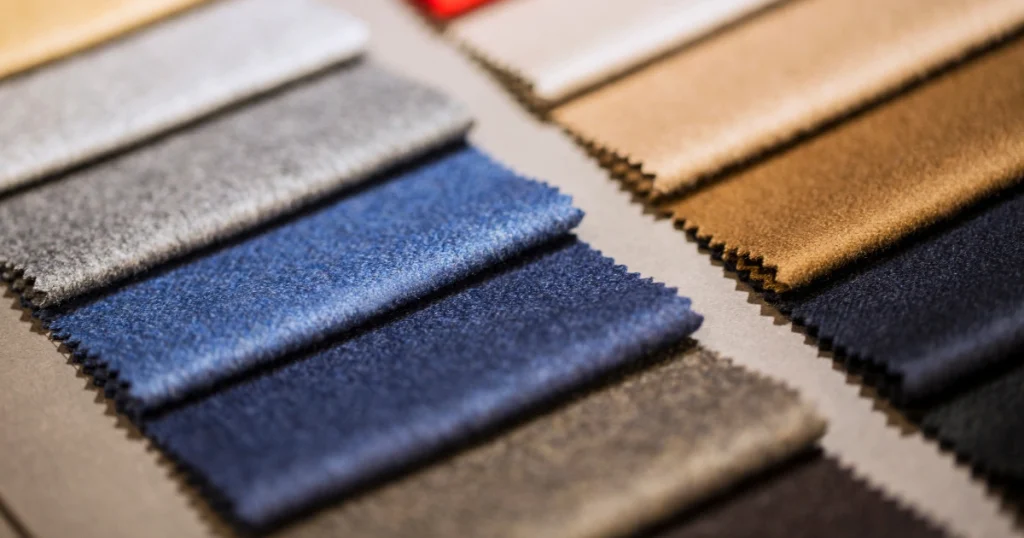
Choosing a suit fabric for hot weather is fundamentally about balancing breathability, comfort, and structure. The suit needs to feel light and allow airflow without losing the shape that makes it look polished and professional. Getting this balance right is one of the clearest areas where expert fabric advice makes a meaningful difference.
The first consideration is the occasion. A summer business suit, a wedding suit, a travel suit, and a smart casual suit each require a different fabric choice. A fabric that works beautifully for a client meeting in a well-air-conditioned office may not be the right choice for an outdoor ceremony in the afternoon heat. Starting from the occasion rather than the fabric usually leads to a better decision. If you are looking for guidance on men’s casual tailoring for summer, Suited & Booted can help you find the right cloth for a more relaxed warm-weather wardrobe.
For summer suits where structure and formality matter, lightweight wool, tropical wool, and high-twist wool are the most reliable options. All three allow airflow while maintaining a sharp, polished appearance, and they hold their line through a full day’s wear in a way that most other summer fabrics cannot. They are the professional’s choice for summer business wear, formal occasions, and any setting where the suit needs to perform as well as it looks.
Linen suits for warm weather
Linen is highly breathable and carries a relaxed, natural elegance that is well-suited to summer tailoring. It is less formal in its presentation than wool and creases more readily, which makes it a better fit for smart casual occasions, garden events, outdoor weddings, and social dressing than for corporate settings or formal business wear.
Linen-blend suits for warm weather
Linen-wool, linen-silk, and wool-silk-linen blends offer the breathability of natural fibres alongside a smoother, more polished finish. These blends are among the strongest warm-weather choices for anyone who wants the comfort of a lighter cloth with a more refined, professional presentation. They are particularly well-suited to summer weddings, destination tailoring, and occasions that combine outdoor and indoor settings.
Mohair suits for warm weather
Mohair blends are a strong choice for warmer weather because they feel crisp, light, and naturally crease-resistant. The slight sheen of mohair also gives the suit a refined evening quality that works well for summer formal occasions and travel tailoring where a fresh appearance needs to be maintained through a long day or journey.
Cotton and cotton-blend suits for warm weather
Cotton and cotton-linen suits are comfortable in warm weather and work well for casual and smart casual settings. They do not offer the same drape, structure, or level of formality as wool, and are generally better suited to relaxed social occasions and informal professional environments than to high-formality business or formal event dressing. For those occasions, a tailored casual suit in a considered summer cloth is often the more versatile and elegant solution.
For Glasgow and the wider UK, it is also worth acknowledging that summer weather can change considerably throughout the day. A fabric chosen for the afternoon heat may need to function equally well on a cool evening, and layering, lining, and construction all contribute to how practical and adaptable a summer suit feels across a full day. A lightweight, thoughtfully constructed suit in the right cloth will always outperform an unlined or poorly finished garment that simply looks light on the hanger.
Common Mistakes to Avoid When Choosing the Best Suit Fabric for Hot Weather
Choosing a suit fabric on the basis of softness, price, or brand name alone is one of the most common errors in suit purchasing. A fabric that feels extraordinary in the hand may not be the most practical choice for regular professional wear, and a highly prestigious cloth house does not guarantee that a particular cloth is right for the season or occasion in question.
The Super-number trap is worth understanding. A very high Super number indicates fine, soft wool, but it does not indicate the most durable or practical choice. Super 150s and above can be delicate cloths that show wear quickly in a suit that is worn frequently. For a suit intended for regular business use, a Super 100s or 110s cloth in the right weave is often a stronger long-term investment than a finer cloth that requires more careful handling.
Very lightweight fabrics, while appealing in warm weather, may not provide sufficient structure for formal business settings. A cloth that feels appropriately light for a relaxed social occasion may read as insufficiently polished in a corporate or client-facing environment. The level of formality required by the setting should always be part of the fabric decision.
Heavy tweeds and flannels are excellent winter choices but genuinely unsuitable for summer weddings, warm-weather travel, or any occasion where the heat and the formality of the event are both working against the wearer. The best cloth wardrobe works across the seasons, not against them.
Pure linen, while beautiful for the right occasion, is not appropriate for every professional or formal setting. Its natural tendency to crease can work against a polished appearance in corporate or high-formality environments, and it is worth weighing the context before choosing linen for a suit that will be worn across a full working day.
Fashion-led fabrics that prioritise novelty over wearability are rarely a sound long-term investment. A suit is a considered purchase, and the cloth should be chosen for longevity, versatility, and the way it performs across real life, not simply for how it looks on a runway or in a single photograph.
Finally, lining, construction, and fit all affect how comfortable and elegant a suit feels in warm conditions. An unlined or half-lined jacket will breathe considerably better than a fully lined one, and a suit that is precisely fitted will always feel more comfortable and look more polished than one that compensates for fit with excess fabric. Cloth is only part of the picture.
Explore Suited & Booted’s lookbook
Choose the Best Suit Fabric with Suited & Booted Glasgow
Suited & Booted brings genuine expertise to the process of fabric selection as well as to the cut, construction, and fitting of the finished suit. Choosing between lightweight wool, tropical wool, high-twist wool, linen blends, cotton-linen cloths, mohair blends, silk blends, wool-silk-linen blends, flannel, tweed, and the various premium cloth houses that supply them is not a decision that benefits from being made alone.
The cloth houses that Suited & Booted works with include Loro Piana, Holland and Sherry, Solbiati, Zegna, and Dormeuil, names that represent the highest standard in luxury tailoring fabrics across both Italian and British traditions. Each of these houses produces cloths with distinct characters and seasonal specialisms, and the guidance available through a consultation means the right cloth for each client’s lifestyle, climate, and wardrobe can be identified with clarity.
Whether the requirement is a summer business suit, a wedding suit, a travel suit, a formal evening suit, or a smart casual garment that moves between professional and social settings, the fabric choice is where the quality of the finished result begins. A consultation with Suited & Booted ensures that choice is made with purpose.
Book an appointment with Suited & Booted Glasgow
Frequently Asked Questions
What is the best fabric for suits?
Wool is generally considered the best fabric for suits because it offers an excellent balance of structure, drape, breathability, and durability across different seasons and occasions. The most appropriate wool cloth will depend on the time of year, the intended use, and how frequently the suit will be worn.
What is the best material for a suit?
The best material for a suit is usually wool for versatility, structure, and long-term performance. For summer and warmer weather, lightweight wool, linen blends, mohair blends, and wool-silk-linen blends can all be excellent depending on the climate, dress code, and how formal the occasion requires the suit to be.
What is the best wool fabric for suits?
Worsted wool is one of the best wool fabrics for suits because it is smooth, durable, refined, and versatile across a wide range of professional and formal settings. For summer, lightweight wool, tropical wool, high-twist wool, and fresco are among the strongest warm-weather alternatives. For cooler months, flannel and tweed offer warmth, character, and a distinctly British tailoring quality.
What are the main suit material types?
The main suit material types include wool, worsted wool, lightweight wool, linen, cotton, silk, cashmere, mohair, flannel, and tweed, as well as blended fabrics such as wool-silk-linen and cotton-linen. Each offers a different balance of structure, breathability, softness, and durability depending on the intended season, occasion, and level of formality.
What is the best suit material for summer?
The best suit material for summer is generally lightweight wool, tropical wool, or high-twist wool for professional and formal settings. Linen blends, wool-silk-linen blends, and mohair blends are also strong warm-weather choices. Each of these fabrics allows airflow while maintaining the structure and polish expected of a well-dressed suit.
What is the best suit fabric for men?
For men, worsted wool is the most versatile and reliable suit fabric for professional and formal wear across most of the year. For summer, lightweight wool, tropical wool, high-twist wool, and linen blends offer breathability without sacrificing the sharp, polished appearance that a suit should carry.
What is the best suit fabric for women?
For women, the best suit fabric depends on the silhouette, season, and occasion. Wool, lightweight wool, silk blends, crepe, and structured suiting cloths all work well for tailored suits and polished separates. For warmer weather, linen blends, wool-silk-linen blends, and breathable suiting cloths in lighter weights are strong options that maintain refinement without adding unnecessary weight.