The History and Evolution of Bespoke Tailoring: Glasgow
January 17, 2025
The history of bespoke tailoring showcases more than just clothing; it highlights an art form that embodies craftsmanship, precision, and…
read more20th June 2026
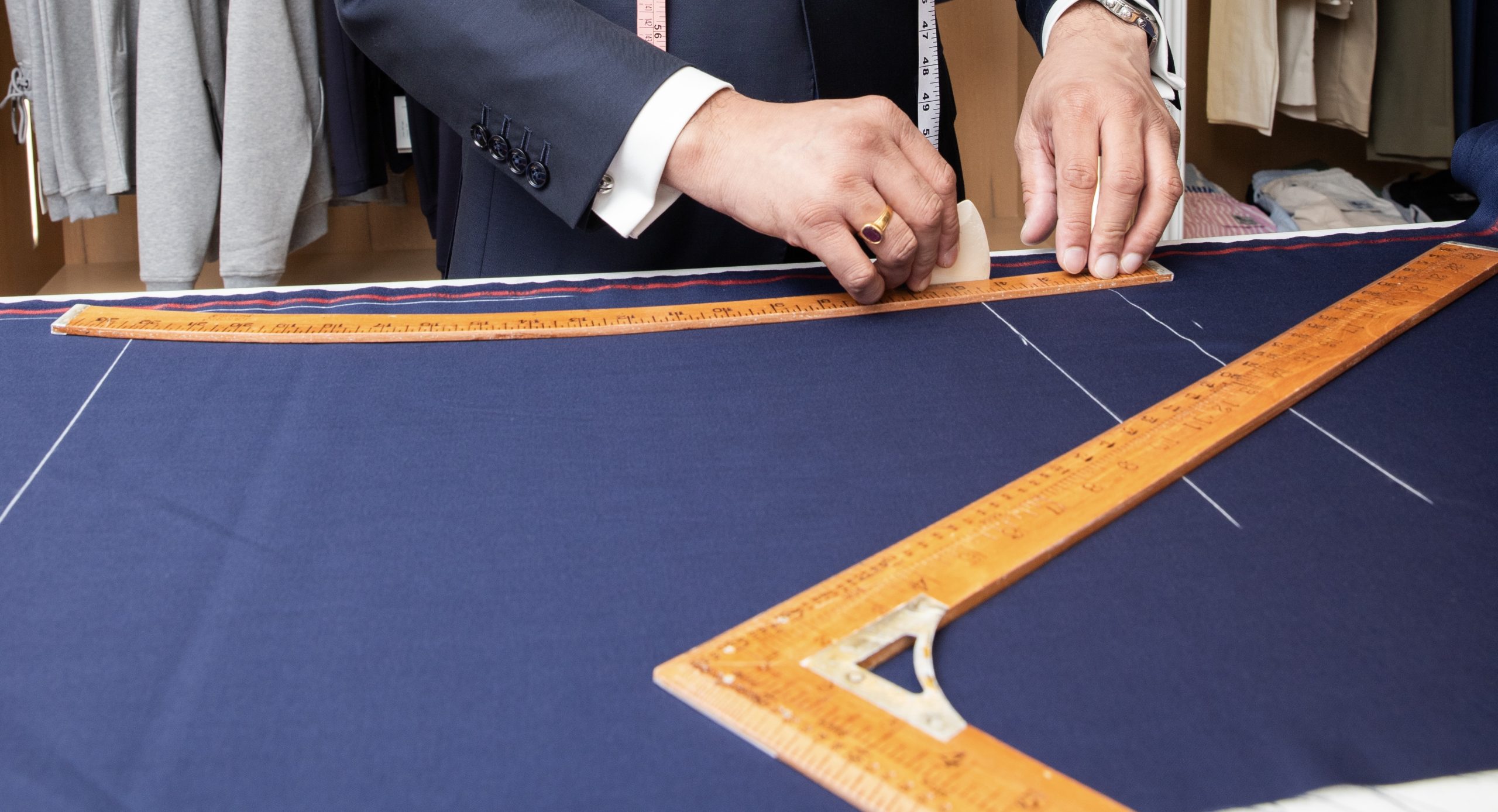
Tailoring language can be confusing. Terms such as bespoke, made to measure, custom, and ready-to-wear are often used as though they mean the same thing. In reality, they describe very different approaches to fit, craftsmanship, personalisation, time, and long-term value.
For UK professionals, wedding guests, grooms, and men building a considered wardrobe, understanding the difference matters. The right suit should not only look good on the day you buy it. It should feel comfortable, reflect your personal style, and serve you well across business, formal events, weddings, and evening occasions.
A suit is a wardrobe investment. Choosing between ready-to-wear, made to measure, and bespoke depends on what you need from the garment, how often you will wear it, how precise the fit needs to be, and how personal you want the experience to feel.
At Suited & Booted, tailoring begins with the person. We guide clients through fit, fabric, construction, styling, and aftercare, helping them make informed choices that feel personal, refined, and made to last.
Understanding tailoring terminology matters before investing in a suit because not every garment described as custom, tailored, or personalised is made in the same way.
A ready-to-wear suit is produced in standard sizes. A made-to-measure suit is adjusted from an existing base pattern. A bespoke suit is created around the individual client, with a pattern developed specifically for them.
These distinctions affect almost every part of the garment: fit, construction, fabric choice, comfort, style, and longevity. Price differences usually reflect the time, skill, fittings, materials, handwork, and level of personalisation involved. The more individual the process, the more refined the result can be.
For professionals, the right suit should offer confidence as well as polish. It should feel comfortable in meetings, refined at events, and dependable season after season.
In the UK, seasonality also matters. A summer wedding suit, winter business suit, black-tie garment, or everyday office suit may each require different fabrics, weights, linings, and construction choices.
The word custom is often used broadly. Some brands use it to describe small changes to a ready-made garment. Others use it for made-to-measure suits, where an existing pattern is adjusted. In some cases, custom may refer to fully bespoke tailoring.
This can make it difficult for clients to compare options clearly.
The most important questions are how the garment is made, whether an individual pattern is created, how many fittings are included, and how much control you have over the finished piece.
Understanding these details helps you choose the right tailoring route with confidence.
A ready-to-wear suit is a finished garment produced in standard sizes and available to buy immediately. It is designed for convenience, speed, and accessibility.
Ready-to-wear suits are not created around an individual’s measurements. Instead, they are made to fit a broad range of body types using standard sizing.
For some occasions, ready-to-wear can be useful. If you need a suit quickly or only wear tailoring occasionally, it may offer a practical solution. However, the fit and personalisation are naturally more limited.
Made to measure is a tailoring process where a suit is created from an existing base pattern that is adjusted to the client’s measurements.
It offers a stronger fit and more personalisation than ready-to-wear, but it is not the same as full bespoke tailoring. The garment begins with a pre-existing pattern, rather than a pattern drafted entirely from scratch.
Made to measure can be a strong option for men who want a more refined fit, more fabric choice, and a garment that feels more personal than ready-to-wear.
Bespoke tailoring is the most personalised form of tailoring. The garment is created around the client’s body, preferences, posture, lifestyle, and intended use.
Rather than adjusting an existing pattern, bespoke tailoring begins with the individual. Measurements, posture, proportions, and style preferences are used to create a garment that is built specifically for the wearer.
Bespoke is about more than fit. It is about craftsmanship, construction, fabric, detail, and the experience of creating something that feels truly personal.
A bespoke garment is created around the individual client. The suit is built around body shape, posture, measurements, and personal preferences. Fittings allow the garment to be refined before it is finished, improving comfort, balance, and shape. There is greater control over style, structure, fabric, lining, lapel shape, pockets, buttons, and finishing details.
Bespoke offers strong long-term value for frequent suit wearers because the garment is designed around how it will be worn. The result should feel personal, comfortable, distinctive, and crafted to last.
Bespoke tailoring is well suited to business leaders, executives, grooms, and frequent suit wearers. It is also valuable for men with specific fit challenges or those who struggle to find a good fit in ready-to-wear garments.
Bespoke is ideal for clients investing in long-term wardrobe pieces, whether for business, weddings, eveningwear, or formal occasions. It is best for those who want a highly personalised garment and a tailoring experience shaped around them from start to finish.
Suited & Booted offers bespoke and made-to-measure tailoring in Glasgow and London, with garments designed around each client’s measurements, lifestyle, and personal style.
Bespoke and made to measure both offer a more personal approach than ready-to-wear, but they are not the same. The key differences come down to pattern, fittings, fit, personalisation, craftsmanship, time, and price.
Bespoke uses a pattern created specifically for the client. Made to measure adjusts an existing base pattern to the client’s measurements. This is one of the most important differences. A bespoke pattern starts with the individual, while made to measure starts with an existing framework.
Bespoke usually involves more fittings and refinements. These fittings allow the tailor to shape the garment gradually and make adjustments before the suit is completed. Made to measure may involve fewer fittings and final alterations, depending on the process.
Bespoke can better account for posture, asymmetry, shoulder slope, stance, and individual proportions. Made to measure improves standard sizing but has more limitations because it works from a base pattern. For men with complex fit requirements, bespoke usually provides a more precise result.
Bespoke generally allows greater freedom in construction, styling, fabric, lining, lapel shape, pockets, buttons, and finishing details. Made to measure offers selected personalisation options within a more defined framework. Both offer more individuality than ready-to-wear, but bespoke allows the highest level of control.
Bespoke often involves more detailed construction and refinement. The level of craftsmanship is closely connected to the number of fittings, pattern work, fabric handling, and finishing details. Made to measure varies depending on the tailor, production method, and garment level.
Bespoke usually takes longer and costs more because it requires more consultation, pattern work, fittings, and refinement. Made to measure is often faster and more accessible, while still offering a stronger fit and more choice than ready-to-wear.
Custom and bespoke are not always the same. Custom is a broad term. It can refer to anything from selecting fabric and buttons on a made-to-measure suit to creating a fully bespoke garment. Because the word is used in different ways, clients should look beyond the label and ask how the garment is actually made.
Some brands use custom to mean made to measure. Others use it to describe styling choices only, such as fabric, lining, buttons, or lapels. A custom suit may not involve a unique pattern.
It may not include multiple fittings. It may not offer the same level of construction or refinement as bespoke tailoring. Before investing, ask whether a personal pattern is created, how many fittings are included, and how much of the garment can be shaped around you.
The right choice depends on your budget, timeline, usage, fit expectations, and personal style. Each option has a place. The key is understanding what you need from the garment.
For UK professionals, seasonality and versatility matter. A well-chosen tailored suit should work across office wear, client meetings, weddings, evening events, and formal occasions.
Ready-to-wear is the fastest and most accessible option. It is produced in standard sizes and can be useful when time is limited, but the fit and personalisation are naturally restricted.
Made to measure offers a more personalised fit and style. It adjusts an existing base pattern to the client’s measurements and allows a greater choice of fabrics and details.
Bespoke provides the highest level of precision, craftsmanship, and individuality. It is created around the client, with an individual pattern, detailed fittings, and a more personal process from consultation to final fitting.
In simple terms, ready-to-wear is about convenience, made to measure is about improved fit and choice, and bespoke is about creating a garment around the individual.
Ready-to-wear, made to measure, custom, and bespoke are not the same.
The right choice depends on your timeline, usage, fit expectations, budget, and personal style. For occasional wear or urgent needs, ready-to-wear may be practical. For a better fit and more choice, made to measure can be a strong option. For the highest level of fit, craftsmanship, and personalisation, bespoke offers the most complete tailoring experience.
For professionals and men who value long-term wardrobe investment, bespoke and made-to-measure options offer stronger fit, comfort, and individuality.
Whether you are comparing bespoke vs made to measure for a business suit, wedding suit, or eveningwear, Suited & Booted can help you choose the right tailoring approach. Book an appointment to create a suit designed around your fit, lifestyle, and occasion.
Bespoke tailoring creates a garment around the individual client, while made to measure adjusts an existing base pattern to the client’s measurements.
Bespoke usually offers more precision, fittings, and personalisation, but made to measure can be a strong option for men who want better fit and style choice than ready-to-wear.
Not always. Custom is a broad term that can describe anything from selected design details to full bespoke tailoring, depending on how the garment is made.
Made to measure usually offers a better fit and more personalisation than ready-to-wear because the garment is adjusted to the client’s measurements.
A bespoke suit usually takes longer than a ready-to-wear or made-to-measure suit because it involves consultation, fabric selection, measurements, fittings, and final adjustments.
Bespoke suits usually require more than one fitting. This allows the tailor to refine the shape, balance, comfort, and overall fit before the suit is completed.
Yes, ready-to-wear suits can often be altered in areas such as trouser length, sleeve length, waist, and jacket suppression. However, major structural changes are limited.
An Ready-to-Wear suit can be improved with alterations, but it will rarely fit like a bespoke suit because it was not created from your individual measurements, posture, or body shape.
Look for a strong consultation process, good fabric choice, accurate measurements, clear fittings, quality construction, and a tailor who understands how and where you plan to wear the suit.
Look for accurate measurements, fabric options, clear style choices, transparent pricing, and a fitting process that allows final adjustments before the suit is completed.
January 17, 2025
The history of bespoke tailoring showcases more than just clothing; it highlights an art form that embodies craftsmanship, precision, and…
read moreJune 10, 2026
Understanding a wedding dress code should make getting dressed easier, not more complicated. Yet invitations often include terms such as…
read more